Diagonal Gaits in the Feathertail Glider Acrobates pygmaeus (Acrobatidae, Diprotodontia): Insights for the Evolution of Primate Quadrupedalism
Karantanis, N.-E., Youlatos, D., & Rychlik, L. (2015). Diagonal gaits in the feathertail glider Acrobates pygmaeus (Acrobatidae, Diprotodontia): Insights for the evolution of primate quadrupedalism. Journal of Human Evolution, 86, 43–54. https://doi.org/10.1016/j.jhevol.2015.06.007
Editorial note. This page combines the original article (Journal of Human Evolution, 86, 43–54) with its published corrigendum (Journal of Human Evolution, 90, 204–206, https://doi.org/10.1016/j.jhevol.2015.11.003). The corrigendum corrected an order-of-magnitude error in the reported stride-length and dimensionless parameters (centimetres had been used in place of metres). Table 1, Figures 5 and 6, and the “Velocity and stride parameters” results below reproduce the corrected values. As the authors noted, the error has no bearing on the statistical significance of the results or on the discussion and conclusions.
Abstract
Research on primate origins has revolved around arboreality and, more specifically, the adaptations that are linked to safe navigation in the fine-branch niche. To this end, extant non-primate mammals have been used as models to assess the significance of these adaptations. However, the size of these models is larger than that estimated for early primates. In contrast, the feathertail marsupial glider Acrobates pygmaeus, with a body mass of 12 g, a clawless opposable hallux, and terminal branch feeding habits appears more suited to modeling behavioral adaptations to the small branch milieu. Analysis of video recordings of 18 feathertail gliders walking on poles of variable diameter and inclination revealed that they preferentially used diagonal sequence gaits, fast velocities and low duty factors. Diagonal gaits did not correlate to duty factor, but increased as substrate size decreased, and from descending to ascending locomotion. Furthermore, the duty factor index increased in more diagonal gaits and ascending locomotion. Finally, velocities were lower on smaller substrates, and were mainly regulated by stride frequency and, to a lesser degree, stride length. Feathertail glider gaits displayed noteworthy behavioral convergences with primate quadrupedalism, but some of these results need additional investigation. Despite any discrepancies, these features appear to be favorable for quadrupedal progression on small branches, providing a selective advantage for navigating within a fine branch niche and highlighting the importance of small body size in early primate evolution.
Introduction
Understanding the origin of primates has always been one of the major research goals of biological anthropology. The quest for these origins has focused on the ecological and behavioral correlates of the unique morphological package of the order, primarily concerning the grasping, nailed feet and hands, and orbital convergence (Cartmill, 1974a,b, 1992). Regarding the adaptive significance of these evolutionary novelties, research on primate origins has revolved around arboreality, and more especially the habitual use of the fine-branch niche, whether it be foraging for arthropods, fleshy fruit or both (Cartmill, 1974a,b; Szalay and Dagosto, 1980; Dagosto, 1988, 2007; Sussman, 1991; Rasmussen and Sussman, 2007). Whatever the case, negotiation of such small branches requires a small body size and, apart from Soligo and Martin’s (2006) scenario, in which a larger body size was proposed as the basis for early primate adaptations, a small ancestral body size has been emphasized as part of a series of stages leading to primate evolution (Cartmill, 1974a; Larson et al., 2000; Gebo, 2004; Sargis et al., 2007). More particularly, these stages include (a) a scansorial, non-grasping, clawed small mammal, (b) an arboreal, clawed mammal with non-opposable, ‘non-powerful’ pedal grasping, (c) an arboreal clawed mammal with a clawless hallux, capable of opposable ‘powerful’ pedal grasping that facilitates the efficient use of terminal branches, and (d) a true arboreal primate with nails on all digits and grasping feet and hands (Gebo, 2004; Sargis et al., 2007). Stages b and c are of primary importance in the evolutionary history of primates as they attempt to reconstruct the acquisition of grasping, nailed extremities and primate-like quadrupedal gait mechanics, and recent investigations have used extant analogs, mainly marsupials, to model them (i.e. Rasmussen, 1990; Cartmill, 1992; Lemelin, 1999; Schmitt and Lemelin, 2002; Lemelin et al., 2003; Youlatos, 2008; Shapiro et al., 2014).
In this context, woolly opossums (Caluromys philander) have been extensively used as models due to their primate-like gait, limb kinematics, morphological (long grasping digits, clawless hallux), as well as ecological and behavioral similarities to primates (Schmitt and Lemelin, 2002; Lemelin et al., 2003; Cartmill et al., 2007b; Youlatos, 2008, 2010). However, woolly opossums are comparably large, weighing between 200 and 400 g, contrasting with predictions of small body masses (at least < 100 g) in early primate ancestors. Another marsupial analogue is the sugar glider (Petaurus breviceps), which also bears ecological, morphological and behavioral similarities to the alleged early stages of primate evolution [see (Shapiro and Young, 2010) for a summary of morphological and eco-behavioral adaptations of sugar gliders], but, albeit smaller than Caluromys, they too are comparably large, ranging between 90 and 160 g. On the other hand, the use of juvenile subjects of P. breviceps and gray short-tailed opossums, Monodelphis domestica, for testing small body size effects on gait kinematics over narrow substrates (Shapiro et al., 2014), is hindered by the effect of ontogeny on locomotion, which has proven to be substantial across a great number of taxa (i.e. Altman and Sudarshan, 1975; Peters, 1983; Berkum et al., 1989; Carrier, 1996; Doran, 1997; Eilam, 1997; Irschick, 2000; Wells and Turnquist, 2001; Niemitz, 2002; Shapiro and Raichlen, 2006; Young, 2012), with its effects surpassing those predicted by body size (Vilensky et al., 1990). As small size appears to be of vital importance in inferring early primate behavioral and morphological adaptations, other small mammals, such as shrews (Gebo, 2004) and treeshrews (Jenkins, 1974; Sargis, 2001) have been also proposed as models for early primate evolutionary stages. However, shrews are far from typically arboreal, with only a few species classified as scansorial (Churchfield, 1990), and the Tupaiidae do not seem suitable candidates, due to their increased terrestriality and low maternal care (Emmons, 2000). Recently, Eurasian harvest mice Micromys minutus, with a body mass at 10 g, flexible locomotion, foot grasping skills, and extensive use of fine branches, were suggested as models for finer scaled evolutionary stages (Urbani and Youlatos, 2013), underscoring the significance of tiny size during early primate evolution.
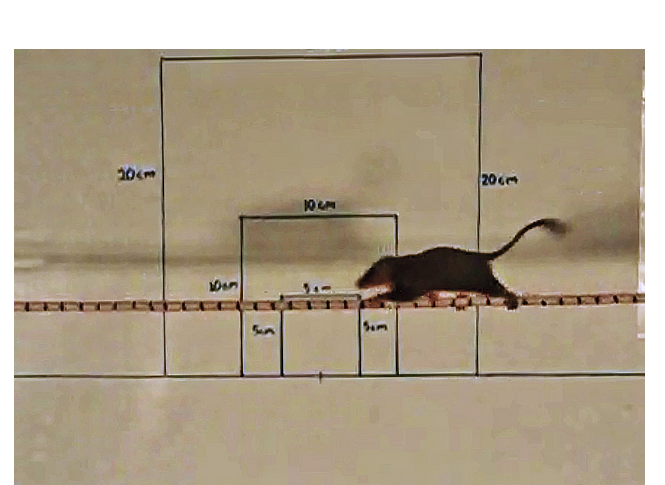
Feathertail gliders Acrobates pygmaeus (Fig. 1) weigh between 10 and 15 g and are among the smallest extant marsupials (Nowak, 1999). They are primarily nocturnal arborealists, feeding and foraging mainly on arthropods, fruit, honeydew and pollen (Goldingay and Kavanagh, 1995). Feathertail gliders possess an opposable clawless hallux, capable of efficient grasping, and volar pads with extensive sweat gland complexes in all digits that enable increased adhesion on all types of surfaces, even glass panes (Rosenberg and Rose, 1999). These adaptations facilitate the use of both tree trunks and the finer branches of upper foliage and lower shrubs of subtropical, temperate and mature woodlands in their habitats in eastern Australia (Ward and Woodside, 2008). Furthermore, A. pygmaeus exhibits slow growth, and high maternal investment, which continues after weaning (Ward, 1990). All these morpho-behavioral features could fit well within suggested scenarios of early primate evolution (Cartmill, 1974a,b, 1992; Sussman, 1991; Gebo, 2004; Rasmussen and Sussman, 2007) and could render feathertail gliders a useful extant model to test some of the unique aspects of primate arboreal quadrupedalism (such as the frequent use of diagonal sequence [DS] gaits, ultimately related to fine branch exploitation).
The frequent use of DS gaits is a general trait of primates, with only a few exceptions (Hildebrand, 1967; Cartmill et al., 2002; Shapiro and Raichlen, 2005; Cartmill et al., 2007b; Nyakatura and Heymann, 2010). Primates commonly use DS gaits, in which the forelimbs touch down soon after the contralateral hind limbs, while most other mammals commonly use lateral sequence (LS) gaits, in which the forelimbs land right after their ipsilateral hind limbs (Hildebrand, 1967). Diagonal sequence gaits have likely evolved to promote inspection of new, unknown and unstable substrates, while moving on terminal branches (Cartmill et al., 2007a). This is partially supported by the common use of DS gaits by some arboreal marsupials (White, 1990; Pridmore, 1994; Cartmill et al., 2002; Schmitt and Lemelin, 2002), and kinkajous (Lemelin and Cartmill, 2010). On the other hand, Vilensky and Larson (1989) proposed that gait selection is not related to locomotor stability, and the dominance of DS gaits in primates is a by-product of neurological reorganizations related to forelimb dexterity. The use of DS or LS gaits is, nevertheless, influenced by substrate properties, but if DS gaits were related to unstable substrate use, as Cartmill et al. (2007a) have proposed, they should be more frequent on narrower and upwards or downwards inclined substrates. However, findings are conflicting. Most strepsirrhines do not exhibit a higher rate of DS gaits on narrower substrates (Stevens, 2008), and P. breviceps does not increase frequencies of DS gaits with decreasing substrate size (Shapiro and Young, 2010). Furthermore, no correlation between substrate size and DS gait use was detected in free-ranging Saguinus mystax, and DS gaits were less common on smaller substrates in Saguinus fuscicollis (Nyakatura and Heymann, 2010). Regarding substrate inclination, past research on a number of arboreal mammals has shown that ascents are characterized by more frequent use of DS gaits than descents (Prost and Sussman, 1969; Lammers, 2007; Nyakatura et al., 2008; Nyakatura and Heymann, 2010; Shapiro and Young, 2010; Shapiro et al., 2014). It has thus been argued that DS gaits reduce the retarding effect of the forelimbs during ascents (Nyakatura et al., 2007), whereas LS gaits allow the forelimbs to provide retardation though a “stop-jolt” before the hind limbs contact the substrate (Rollinson and Martin, 1981). These findings indicate that there is a link between diagonality and the control of locomotion over substrate inclination and size.
Another feature unique to primate arboreal quadrupedalism is that primates control locomotion on fine arboreal substrates by relative stride length to a greater extent than stride frequency (Larson et al., 2000, 2001). Increased stride length, rather than stride frequency, is regularly employed by primates to reach higher velocities without increasing involuntary branch sway (Demes et al., 1990). In contrast, most other arboreal mammals, marsupials included, tend to increase their velocity by higher stride frequencies, possibly reducing body oscillations, despite its relatively high energetic cost (Strang and Steudel, 1990). These different strategies, strongly related to the mechanically and energetically efficient use of small and unstable branches, are important for understanding the adaptive significance of early primate quadrupedal adaptations.
All these assumptions on the putative adaptive significance of primate-like quadrupedal gaits and their interplay with specific features of habitat structure have derived from observations on extant euprimates and tests on relatively large-sized extant analogues. However, body mass plays an essential role in the interactions between an animal and its environment and is considered significant during early primate evolution. Therefore, testing subjects of small adult body masses would provide a more realistic view of the mechanisms that likely promoted similar adaptations during early primate evolution. In this context, the current study aims to test whether early arboreal primate ancestors with a clawless, grasping hallux, as modeled by the small-sized A. pygmaeus, could demonstrate key features related to primate-like arboreal quadrupedalism. More specifically we aim to examine whether feathertail gliders would demonstrate an overall frequent use of DS gaits, an increased use of DS gaits with decreasing substrate size and ascending locomotion, and velocity regulation by either stride length or stride frequency and to what extent, and whether such features could be linked to small body size quadrupedalism on fine branches.
Methods
Specimens
For the purposes of the current study, we tested nine female and nine male adult A. pygmaeus (Acrobatidae, Diprotodontia). All specimens were captive-born and permanently housed in the collections of the Nowe Zoo, Poznań, Poland. The animals inhabited large enclosures under a reversed day–night regime. The enclosures contained a large variety of available substrates of diverse sizes and orientations, enabling the gliders to move freely in an enriched environment. Feathertail gliders made extensive use of all available arboreal substrates within the enclosures and were inclined to willingly use the provided substrates during the experimental procedure. All the specimens were handled entirely by the specialized zoo staff, were fully habituated to human presence and did not display any stereotypical or stressful behaviors. Mean total head-body length of the subjects was 7.4 cm (n = 18, 7.0–7.7 cm, SD = 0.16) and mean body mass was 12 g (n = 18, 10–15 g, SD = 1.23).
Experimental setup
A single, specially configured, filming terrarium (L: 90 cm × H: 40 cm × W: 40 cm) was used for the experimental procedure. Its sides and base were transparent glass windows and it was topped by a wooden frame, with a lid door and wire mesh for ventilation. Within the terrarium, we established a wooden frame to support the poles. The poles were 80 cm long, cylindrical, semi-hardwood rods. They were marked with vertical blue lines every 1 cm for a reliable estimation of absolute lengths. During the recordings, the visible length of the rod was approximately 30 cm. Diameter and inclination and direction of movement accounted for the classification of different substrate categories. Thus, four diameters (2 mm, 5 mm, 10 mm and 25 mm), and two different inclinations set at 0° (horizontal) and at 45° (oblique), combined with three movement directions (horizontal, descent and ascent) were used to define a total of 12 distinct substrate categories.
Data collection was completed in a total of three recording sessions, during April 2013. During each session, six individuals were transferred from their enclosure to a temporary accommodation terrarium by specialized zoo staff. Subsequently, each individual was transported to the filming terrarium. Each single individual was allowed free movement within the filming terrarium in order to familiarize itself with the new environment. Minimal or no stimulation was required for the subjects to walk on poles. During each filming session, every subject was tested on all 12 substrate categories. After each filming session, the animal was transported to another accommodation terrarium, to ensure that no individual was tested twice during a particular session.
For video recording, we used a Sanyo digital camcorder (VPC-HD 2000, Sanyo, Osaka, Japan), filming at 240 fps, which was positioned at a distance of 1 m from the filming terrarium to reduce image distortion. For our analyses, we considered only complete symmetrical gaits (those in which the left and right limbs of a girdle were evenly spaced in time), initiating with the touchdown of the left hind limb and ending at the subsequent touchdown of the same limb, including both liftoffs and touchdowns of all limbs (Hildebrand, 1967, 1968, 1976). Cycles involving beginnings or endings of locomotor bouts or loss of balance were discarded. Overall, only cycles of stable symmetrical locomotion, regardless of velocity, were retained and regarded as indicative of natural, unbiased behavior. The present research followed the guidelines for the treatment of animals in behavioral research and teaching (ASAB/ABS, 2012) and complied with relevant regulations and legislations of the Nowe Zoo and the Adam Mickiewicz University in Poznań and the relevant legislation of the Aristotle University of Thessaloniki.
Gait analyses
Video analysis and data collection, distance and time calculations were made by importing videos and calibrating time and distance measurements using Tracker 4.84 (Brown, 2009). Microsoft Excel 2010 (Redmond, WA, USA), and SPSS 21 (SPSS Inc., Chicago, IL, USA) were used for all statistical analyses.
For our analyses we considered the following gait parameters:
- Diagonality (D) (Cartmill et al., 2007a,b), the percentage of the stride cycle interval the footfall of a forelimb follows behind the ipsilateral hind limb. Although it was measured as a scale variable, it was also divided into five ordinal classes: (a) Lateral Sequence Lateral Couplets (0 ≤ LSLC < 25), (b) Lateral Sequence Diagonal Couplets (25 ≤ LSDC < 50), (c) Trot (= 50), (d) Diagonal Sequence Diagonal Couplets (50 < DSDC ≤ 75), (e) Diagonal Sequence Lateral Couplets (75 < DSLC ≤ 100);
- Duty Factor (DF), the mean of duty factors of all limbs, defined as the percentage of a cycle during which a limb is in contact with the substrate;
- Duty Factor Index (DFI), the ratio of forelimb duty factor (DFf) and hind limb duty factor (DFh), calculated as 100*DFh/DFf (Cartmill et al., 2007a). Values > 100 indicate longer hind limb than forelimb stance durations, whereas values < 100 specify shorter hind limb than forelimb stance durations;
- Stride Duration (t), total duration of a single stride in seconds, measured from the frame where a stride cycle began until the frame the same stride cycle ended;
- Stride Length (l), the corresponding distance covered during a single stride cycle, in meters;
- Velocity (v), the speed in which the subjects moved, calculated by dividing stride length with stride duration, and measured in meters/second (m/s);
- Stride Frequency (f), the number of strides per second;
As these parameters are size-dependent, we used the hind limb length of the feathertail glider (Mean = 3.21 cm, 3.0–3.4 cm, SD = 0.09) to calculate the dimensionless measures of stride duration, stride length, velocity and stride frequency (Hof, 1996). These calibrated absolute measurements are useful for estimating efficiency during locomotion (Hof, 1996): (a) dimensionless stride duration (tD) = t / √(l0/g); (b) dimensionless stride length (lD) = l / l0; (c) dimensionless velocity (vD) = v / √(g·l0); (d) dimensionless stride frequency (fD) = f / √(g/l0); where l0 is hind limb length of each animal and g is the acceleration of gravity (g = 9.81 m/s²).
We tested for statistically significant discrepancies in the utilization of diagonal and lateral gaits using binomial testing, but also incorporated the trot category into the analysis by using a chi-square test (χ²). All of these analyses were carried out using two-tailed Monte Carlo procedures for enhanced p estimation accuracy (Kalos and Whitlock, 2009).
Analysis of covariance (ANCOVA) was selected in order to explore variable relationships while controlling for other possible covariants, when both scale and ordinal variables were involved. Spearman two-tailed tests were used to explore correlations between diagonality and duty factor index, as well as stride frequency and stride length. Stepwise regression models were constructed to examine the impact of both stride frequency and stride length on velocity, using their dimensionless counterparts. The impact of each parameter was calculated with the R² of partial correlations, i.e. the correlation between a dependent variable and its covariate, after the impact of other covariates is removed (Harrell, 2001).
Results
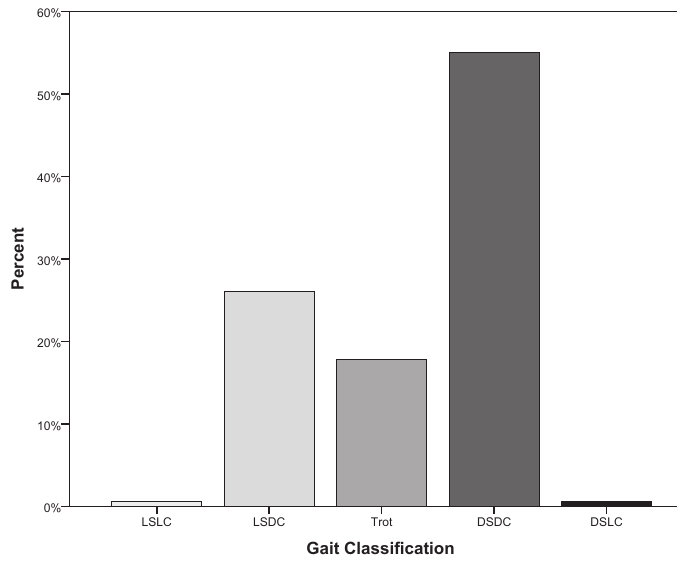
Throughout our experiments, a total of 181 valid symmetrical gait stride cycles was recorded. Overall, the symmetrical gaits of A. pygmaeus were characterized by fast velocities, low duty factors, and mainly diagonal sequence gaits (Table 1, Fig. 2).
Table 1. Summary of means and standard deviations (in brackets) of the gait statistics for Acrobates pygmaeus. N indicates the number of analyzed cycles for each substrate size and orientation category. (Corrected values, per the 2016 corrigendum.)
| Size | Direction | N | Diagonality (D) | Duty factor (DF) | DFI | Stride duration (t, s) | Stride length (l, m) | Velocity (v, m/s) | Stride frequency (f, /s) | tD | lD | vD | fD |
|---|---|---|---|---|---|---|---|---|---|---|---|---|---|
| 2 mm | Descent | 8 | 53.13 (7.95) | 42.24 (3.53) | 90.63 (16.44) | 0.086 (0.009) | 0.071 (0.004) | 0.84 (0.12) | 11.72 (1.32) | 1.49 (0.15) | 2.18 (0.15) | 1.48 (0.22) | 0.68 (0.07) |
| Horizontal | 22 | 50.19 (12.16) | 55.35 (5.84) | 99.08 (11.71) | 0.144 (0.086) | 0.064 (0.009) | 0.52 (0.17) | 8.2 (2.45) | 2.54 (1.54) | 2.05 (0.31) | 0.94 (0.31) | 0.47 (0.14) | |
| Ascent | 12 | 56.75 (10.73) | 43.75 (4.87) | 112.2 (20.29) | 0.148 (0.115) | 0.070 (0.009) | 0.66 (0.28) | 9.71 (4.3) | 2.59 (2.04) | 2.19 (0.29) | 1.18 (0.49) | 0.55 (0.25) | |
| 5 mm | Descent | 7 | 50.93 (4.24) | 40.45 (4.5) | 103.16 (11.83) | 0.122 (0.095) | 0.069 (0.006) | 0.75 (0.30) | 10.59 (3.92) | 2.12 (1.63) | 2.13 (0.20) | 1.32 (0.54) | 0.61 (0.22) |
| Horizontal | 21 | 52.43 (11.59) | 48.93 (7.48) | 91.2 (17.52) | 0.115 (0.96) | 0.076 (0.001) | 0.85 (0.29) | 11.2 (3.45) | 2.03 (1.71) | 2.41 (0.30) | 1.53 (0.52) | 0.63 (0.19) | |
| Ascent | 8 | 51.65 (3.05) | 42.08 (3.84) | 106.72 (13.51) | 0.091 (0.014) | 0.069 (0.005) | 0.77 (0.12) | 11.18 (1.61) | 1.57 (0.24) | 2.08 (0.15) | 1.35 (0.21) | 0.65 (0.09) | |
| 10 mm | Descent | 9 | 49.32 (9.38) | 28.23 (6.11) | 83.44 (12.91) | 0.066 (0.007) | 0.076 (0.004) | 1.17 (0.15) | 15.28 (1.78) | 1.15 (0.14) | 2.36 (0.15) | 2.07 (0.27) | 0.88 (0.11) |
| Horizontal | 42 | 55.95 (8.64) | 31.64 (6.29) | 105.46 (26.05) | 0.07 (0.007) | 0.086 (0.016) | 1.24 (0.23) | 14.37 (1.43) | 1.23 (0.12) | 2.72 (0.48) | 2.22 (0.40) | 0.82 (0.08) | |
| Ascent | 16 | 52.73 (8.4) | 33.22 (4.11) | 102.44 (12.44) | 0.073 (0.010) | 0.073 (0.011) | 1.02 (0.22) | 13.81 (1.65) | 1.27 (0.17) | 2.24 (0.34) | 1.79 (0.38) | 0.80 (0.10) | |
| 25 mm | Descent | 8 | 39.24 (9.98) | 31.44 (5.48) | 82.1 (21.45) | 0.071 (0.008) | 0.086 (0.012) | 1.23 (0.13) | 14.3 (1.68) | 1.26 (0.12) | 2.71 (0.30) | 2.16 (0.22) | 0.80 (0.08) |
| Horizontal | 23 | 53.00 (5.39) | 35.11 (9.21) | 99.08 (15.1) | 0.14 (0.117) | 0.084 (0.015) | 0.86 (0.39) | 10.37 (4.22) | 2.47 (2.08) | 2.62 (0.49) | 1.53 (0.69) | 0.59 (0.24) | |
| Ascent | 5 | 50.3 (10.15) | 35.51 (3.87) | 96.8 (15.03) | 0.083 (0.009) | 0.076 (0.011) | 0.91 (0.14) | 12.08 (1.35) | 1.44 (0.17) | 2.29 (0.33) | 1.59 (0.23) | 0.70 (0.09) | |
| Total | Mean | 181 | 52.5 (9.61) | 39.11 (10.5) | 99.34 (19.6) | 0.102 (0.76) | 0.077 (0.014) | 0.93 (0.34) | 11.96 (3.47) | 1.80 (1.34) | 2.41 (0.44) | 1.65 (0.61) | 0.68 (0.20) |
Diagonality and duty factor
Feathertail gliders consistently exhibited mean diagonality over 50.00 (Table 1) and adopted diagonal sequence gaits (DSDC and DSLC, combined n = 100) much more often than lateral sequence gaits (LSDC and LSLC, combined n = 49) (lateral vs. diagonal: binomial test, p < 0.001; lateral vs. trot vs. diagonal, χ² = 41.514, p < 0.001; Table 2, Fig. 2). However, the vast majority of gaits varied from LSDC to DSDC (98.34%, n = 178), with LSLC and DSLC seldom encountered; DSDC was by far the most frequent gait (χ² = 179.193, p < 0.001; Table 2).
Duty factors ranged from 16.90 to 66.91, with means for each category consistently lower than 50.00 (Table 1). This indicates that feathertail gliders ambled [running at intermediate speed, without a whole-body aerial phase (Schmitt et al., 2006)] and ran [gaits in which each foot is on the ground for less than half their duration (Hildebrand, 1967)], rather than walked [gaits in which each foot is on the ground for more than half their duration (Hildebrand, 1967)]. In addition, the duty factor was significantly higher in narrower substrates (F = 27.304, p < 0.001, controlling for the direction of movement and velocity), indicating lower speeds (F = 8.842, p < 0.001, controlling for the direction of movement and duty factor) and a more cautious body displacement. There was also no significant covariance between diagonality and duty factor when controlling for substrate size, direction of movement and velocity (F = 1.087, p = 0.348). Nevertheless, as past research has demonstrated correlations between duty factor and diagonality (Cartmill et al., 2002), all subsequent tests, regarding gait parameters, were also controlled for duty factor.
Table 2. Summarized statistics of gait diagonality classifications for Acrobates pygmaeus.
| Substrate size | Direction | LSLC | LSDC | Trot | DSDC | DSLC |
|---|---|---|---|---|---|---|
| 2 mm | Descent | 0 (0.0%) | 2 (25.0%) | 2 (25.0%) | 4 (50.0%) | 0 (0.0%) |
| Horizontal | 0 (0.0%) | 11 (50.0%) | 2 (9.1%) | 8 (36.4%) | 1 (4.5%) | |
| Ascent | 0 (0.0%) | 1 (8.3%) | 3 (25.0%) | 8 (66.7%) | 0 (0.0%) | |
| 5 mm | Descent | 0 (0.0%) | 2 (28.6%) | 2 (28.6%) | 3 (42.9%) | 0 (0.0%) |
| Horizontal | 1 (4.8%) | 3 (14.3%) | 5 (23.8%) | 12 (57.1%) | 0 (0.0%) | |
| Ascent | 0 (0.0%) | 1 (12.5%) | 3 (37.5%) | 4 (50.0%) | 0 (0.0%) | |
| 10 mm | Descent | 0 (0.0%) | 5 (55.6%) | 0 (0.0%) | 4 (44.4%) | 0 (0.0%) |
| Horizontal | 0 (0.0%) | 8 (19.0%) | 7 (16.7%) | 27 (64.3%) | 0 (0.0%) | |
| Ascent | 0 (0.0%) | 5 (31.3%) | 0 (0.0%) | 11 (68.8%) | 0 (0.0%) | |
| 25 mm | Descent | 1 (12.5%) | 1 (12.5%) | 5 (62.5%) | 2 (25.0%) | 0 (0.0%) |
| Horizontal | 0 (0.0%) | 3 (13.0%) | 5 (21.7%) | 15 (65.2%) | 0 (0.0%) | |
| Ascent | 0 (0.0%) | 1 (20.0%) | 1 (20.0%) | 3 (60.0%) | 0 (0.0%) | |
| all sizes | Descent | 1 (3.1%) | 14 (43.8%) | 6 (18.8%) | 11 (34.4%) | 0 (0.0%) |
| Horizontal | 1 (0.9%) | 25 (23.1%) | 19 (17.6%) | 62 (57.4%) | 1 (0.9%) | |
| Ascent | 0 (0.0%) | 8 (19.5%) | 7 (17.1%) | 26 (63.4%) | 0 (0.0%) | |
| Total | 2 (1.1%) | 47 (26.0%) | 32 (17.7%) | 99 (54.7%) | 1 (0.6%) |
Effects of substrate diameter and direction of movement on diagonality
In our gait sample, there was an overall significant effect of substrate diameter on diagonality, controlling for mean duty factor and direction of movement (F = 3.395, p = 0.019). More specifically, adjusted mean diagonality (i.e. after controlling for mean duty factor and direction of movement) tended to decrease as substrate size increased (Table 3a). However, differences were only significant between the 2 mm and the 25 mm size classes (Bonferroni Post-Hoc: p = 0.012). To test for covariance between diagonality and direction of movement, we controlled for the effects of mean duty factor and substrate size. Overall, adjusted mean diagonality (i.e. after controlling for mean duty factor and substrate size) increased from descending towards horizontal locomotion and decreased once more towards ascending locomotion (Table 3b; F = 7.936, p = 0.001). However, differences were significant only between descents and horizontal locomotion (Bonferroni Post-Hoc: p < 0.001).
Table 3. Adjusted means (estimated marginal means) of diagonality for Acrobates pygmaeus on (a) the different substrate size classes, after controlling for mean duty factor and direction of movement (F = 3.395, p = 0.019) and (b) on the different classes of direction of movement, after controlling for mean duty factor and substrate size (F = 7.936, p < 0.001).
| Mean | Std. Error | 95% CI lower | 95% CI upper | |
|---|---|---|---|---|
| (a) Substrate size | ||||
| 2 mm | 56.57 | 1.67 | 53.27 | 59.89 |
| 5 mm | 54.59 | 1.60 | 51.43 | 57.76 |
| 10 mm | 51.20 | 1.30 | 48.63 | 53.77 |
| 25 mm | 48.85 | 1.56 | 45.77 | 51.93 |
| (b) Direction of movement | ||||
| Descent | 47.15 | 1.57 | 44.04 | 50.25 |
| Horizontal | 54.38 | 0.84 | 52.72 | 56.04 |
| Ascent | 52.37 | 1.35 | 49.70 | 55.05 |
Duty factor index
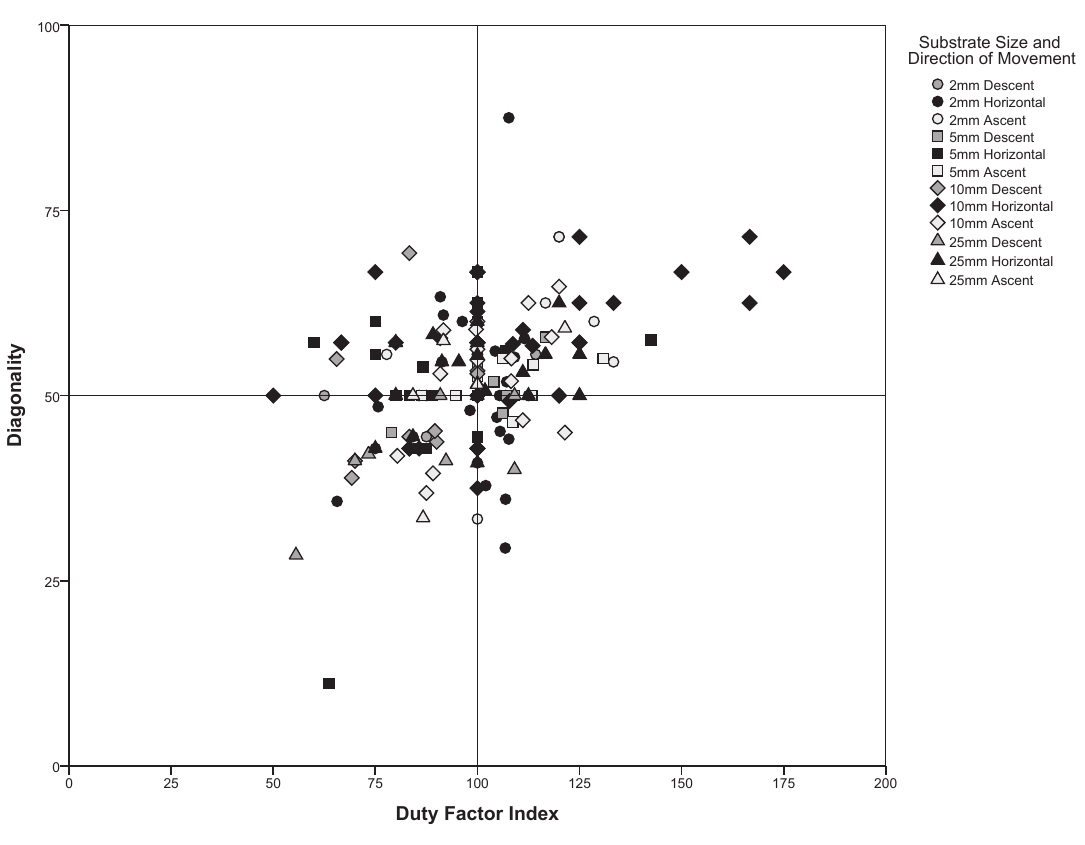
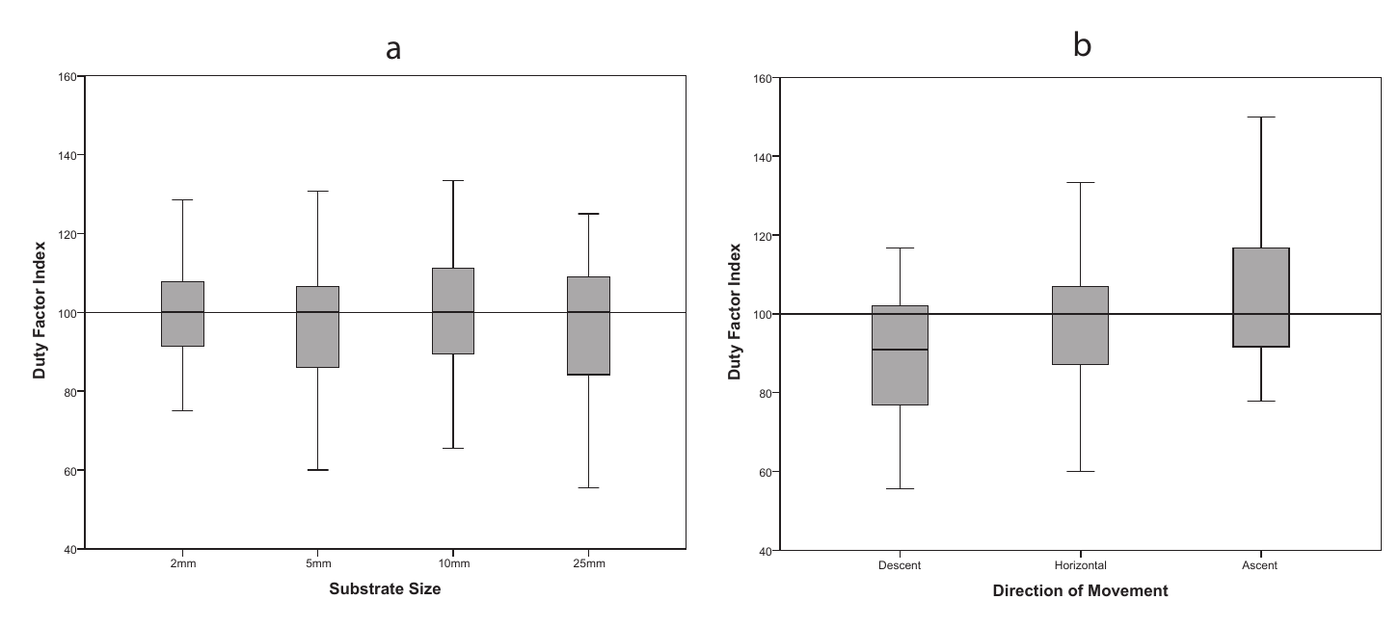
The duty factor index averaged around 100, with variation among different categories (Table 1). The index increased significantly, though with moderate strength, with diagonality (R = 0.422, p < 0.001; Fig. 3). This indicates that hind limb stance phase increased in more diagonal gaits (see also Cartmill et al., 2007a). Furthermore, the duty factor index and substrate diameter did not covary (F = 0.368, p = 0.776, controlling for direction of movement and diagonality; Fig. 4a), but increased along with the direction of movement (F = 3.851, p = 0.023, controlling for substrate diameter and diagonality; Fig. 4b). Consequently, the hind limb stance phase increased and the forelimb stance phase decreased, when moving from declining towards inclining substrates.
Velocity and stride parameters
(The values in this subsection reflect the corrected figures published in the 2016 corrigendum.)
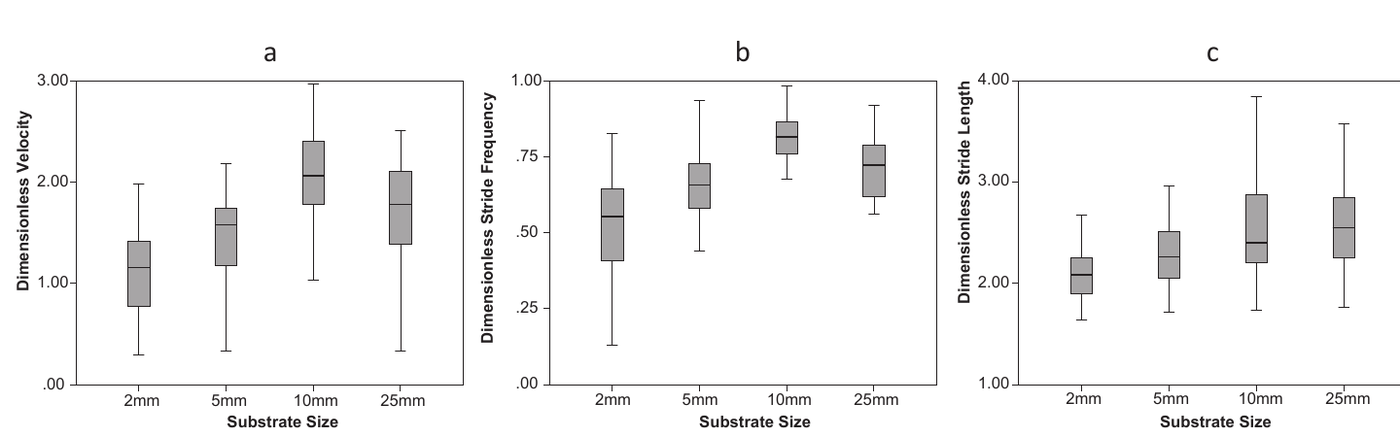
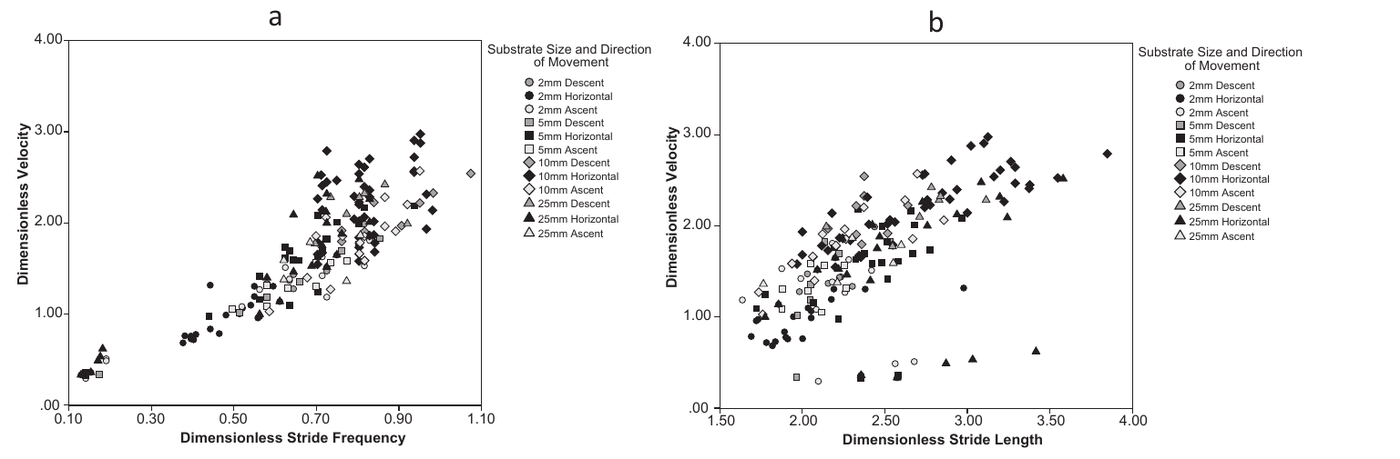
In order to estimate locomotor efficiency in A. pygmaeus, we analyzed velocity, stride frequency, stride length, and stride duration as dimensionless parameters (sensu Hof, 1996). Velocity correlated to substrate size and increased with increased size (F = 40.27, p < 0.001; Fig. 5a). Moreover, stride frequency (controlling for the effect of stride length, F = 28.55, p < 0.001; Fig. 5b) and stride length (controlling for the effect of stride frequency, F = 13.55, p < 0.001, Fig. 5c) also increased from smaller to larger substrate sizes. The construction of a stepwise regression model, on the effects of stride frequency and stride length on velocity, showed that stride frequency was the main factor for velocity regulation (R² = 62.73%, F = 545.660, p < 0.001; Fig. 6a). Stride length also played a significant role, but explained a much smaller amount of variation in velocity (R² = 22.94%, F = 5314.570, p < 0.001; Fig. 6b). Additionally, there was significant, though weak, correlation between stride length and stride frequency (R = 0.238, p = 0.001). Both parameters seem to significantly act as regulating mechanisms on velocity, with some limited interaction between them and at different rates.
Discussion
One of the keystone apomorphies of the order Primates is the way they move quadrupedally along single, small, arboreal substrates. This quadrupedal progression is characterized by the frequent use of diagonal sequence diagonal couplets compliant gaits, especially on smaller substrates, reduced peak reaction forces and increased forelimb protraction and overall contribution to body progression (Cartmill et al., 2002). Given that these morpho-behavioral novelties likely evolved during early primate evolution (Gebo, 2004; Sargis et al., 2007), their adaptive significance can only be assessed by the use of extant analogues. In effect, a finer look at other arboreal mammals, especially marsupials, indicates that some of these behavioral features, such as the frequent use of diagonal gaits (DS), are not exclusive to primates (White, 1990; Pridmore, 1994; Cartmill et al., 2002; Schmitt and Lemelin, 2002; Lemelin and Cartmill, 2010). However, a major drawback of these extant analogues is their size. Small body size has been considered integral to early primate evolution (Cartmill, 1974a; Nowak, 1999; Larson et al., 2000; Gebo, 2004), but the best candidate model so far, the woolly opossum (C. philander), weighs around 300 g, contrasting with predictions and fossil evidence of early primate body mass [e.g., Micromomyidae: 30–40 g (Bloch and Boyer, 2007), early euprimates: Altanius orlovi: 30 g (Gingerich et al., 1991); Altiatlasius koulchii: 30–60 g (Bajpai et al., 2008), Donrussellia provincialis: 40 g (Gilbert, 2004); Teilhardina belgica: 40–80 g (Gebo et al., 2000), and possibly even smaller ancestors (Gebo, 2004)]. In contrast, feathertail gliders, A. pygmaeus, with a body mass of 12 g, a clawless opposable hallux (Rosenberg and Rose, 1999) and terminal branch feeding habits (Ward and Woodside, 2008), appear more suited to modeling behavioral adaptations in the small branch milieu.
The current study of quadrupedal locomotion of feathertail gliders showed that these tiny-sized marsupials mainly used diagonal sequence (DS) gaits, fast velocities and low duty factors. Diagonality did not correlate to duty factor, but increased as substrate size decreased, and from descending to ascending locomotion. Furthermore, the duty factor index increased in more diagonal gaits and ascending locomotion. Finally, velocities were lower on smaller substrates, and were mainly regulated by stride frequency and, to a lesser degree, stride length.
During quadrupedal locomotion, A. pygmaeus used high velocities extensively and consequently had low duty factors. This is likely a common behavior of small arboreal marsupials, related to their small size and elevated metabolism (Delciellos and Vieira, 2007). These relatively high speeds may account for the observed high rates of DS gaits (Tables 1 and 2), a common trend for some arboreal marsupials, which usually shift to LS gaits at lower speeds (Pridmore, 1994; Shapiro and Young, 2010; Biknevicius et al., 2013). Unfortunately, our sample of high duty factor gaits was restricted (n = 30, across all categories) and therefore it was difficult to obtain statistically robust conclusions on the use of DS gaits at lower speeds. Nevertheless, our analyses showed no significant covariance between diagonality and duty factor, while controlling for the effect of substrate size and direction of movement. This indicates that the feathertail gliders may not shift to LS gaits at lower speeds, as would be expected, and may likely retain their DS gaits during walking gaits as well. However, the current data may represent a sample at the lower tail end of the duty factor distribution. Thus, it is not certain that the higher tail end of duty factors would be governed by the same statistical relationship. Consequently, similar conclusions should be very cautiously considered, but would suggest that some small arboreal mammals with prehensile extremities may predominantly utilize DS gaits, regardless of the velocity in which they move. If this holds true, it may bear important implications for the evolution of such behavior in early, supposedly small-bodied, primate ancestors (Sargis et al., 2007).
The importance of DS gaits for A. pygmaeus was further substantiated by their overall preferential use over LS gaits, regardless of any observed variation on different substrates and orientations. Thus, diagonality increased on smaller substrates, as well as from descents to horizontal locomotion and ascents (Table 3a,b). This adaptive plasticity is comparable to that observed in most primates, which adjust their gaits in accordance with substrate characteristics (Stevens, 2006), and raises several interesting questions. First, Vilensky and Larson (1989) proposed that selecting between DS and LS gaits does not impact locomotor stability, but the dominance of DS gaits in primates is a side effect of primate-specific brain reorganization. However, the discovery that several marsupials, such as C. philander (Schmitt and Lemelin, 2002; Lemelin et al., 2003), Trichosurus vulpecula (White, 1990) and A. pygmaeus (this study), frequently employ DS gaits on arboreal substrates does not seem to support this explanation. Even though stability might not be the advantage procured by DS gaits, Cartmill et al. (2002) proposed instead that diagonal sequence diagonal couplets (DSDC) gaits allow an animal to bear its mass on a hind limb, while its diagonal forelimb tests a new substrate during a crossing. If the new substrate is unstable, the animal can fall back swiftly and safely to the previous substrate, still anchored by the hind limb. Thus, diagonality should be negatively correlated to substrate size. Our results seem to support this claim. We found that, while controlling for the effect of the direction of movement, diagonality decreased on larger substrates (Table 3a), reaffirming predictions by Cartmill et al. (2002). In effect, A. pygmaeus seemed to move more diagonally (Table 3a) and at slower paces (Table 1) on the smaller substrates. This indicates that, despite their small size, which might impose different biomechanical constraints in relation to slender substrates (Preuschoft, 2002), feathertail gliders very likely require behavioral adjustments related to DS gaits in order to safely negotiate the smallest of branches.
Regarding direction of movement, diagonality was lower in descents than in horizontal locomotion and ascents. This indicates that feathertail gliders tended to use more lateral gaits while descending, and more diagonal gaits while moving horizontally and during ascents. Declining substrates can also be the outcome of slender peripheral branches bent under an animal’s weight. In this case, they may consist of rather unstable substrates that would require safe anchoring of the hind limbs and the use of DS gaits, according to Cartmill et al. (2002). However, this was not substantiated by our observations on feathertail gliders, as is also the case for other arboreal primates and non-primate mammals (Prost and Sussman, 1969; Lammers, 2007; Nyakatura et al., 2007; Nyakatura and Heymann, 2010; Shapiro and Young, 2010; Shapiro et al., 2014). In fact, in descents, arboreal mammals face a cranial/anterior shift of the center of mass, which is associated with increasing contact time and a higher fraction of vertical impulse on the forelimbs, enhancing their regulative and supportive role (Rollinson and Martin, 1981; Lee et al., 2004; Nyakatura et al., 2008; Young, 2012). Additionally, during descending locomotion, lateral gaits allow the forelimbs to provide retardation though a “stop-jolt” before the hind limbs contact the substrate (Rollinson and Martin, 1981). In feathertail gliders, this retardation of the forelimbs may be further related to the lower duty factor indices observed during descents (Table 1, Fig. 4b). A lower duty factor index indicates an increased forelimb duty factor compared to that of the hind limb, emphasizing an enhanced anchoring role of the forelimbs (Lee et al., 2004; Nyakatura et al., 2008). On the other hand, compared to descents, both duty factor index and diagonality increased on inclined substrates. This indicates that diagonal sequence gaits and hind limb duty factor, compared to that of the forelimb, increase in ascents. In effect, increased diagonality on inclined substrates is associated with a caudal shift of the center of mass and the reduction of the retarding role of the forelimbs in the first part of the stance phase (Nyakatura et al., 2007). This enhances the load-bearing role and mediates the propulsive role of the hind limbs (Lee et al., 2004; Young, 2012). These mechanisms very likely promote safe ascending progression and enable a farther forelimb reach, in a manner comparable to vertical climbing and clinging (Hirasaki et al., 2000; Johnson, 2012).
In A. pygmaeus, the functional interplay between diagonality and duty factor index in different substrate categories was also corroborated by their correlation, although with moderate strength. This is also the case for most primates (Cartmill et al., 2002), with the exception of small-bodied callitrichids which employ LS gaits very often (Schmitt, 2003; Nyakatura et al., 2007; Nyakatura and Heymann, 2010). In primates, this correlation has been observed mainly for walking gaits, whereas duty factor index and diagonality can also be correlated at higher speed in non-primate mammals as well (Cartmill et al., 2002). As the majority of the feathertail gliders’ gaits were ambles and runs, a similar conclusion should be treated with caution, as it may be a simple result of the higher speeds encountered in this tiny marsupial.
Feathertail gliders seemed to regulate velocity primarily by stride frequency and to a lesser extent by stride length (Fig. 6a,b). A similar behavioral mechanism of speed regulation has been observed in another small-bodied marsupial Gracilinanus microtarsus (mass < 35 g; Delciellos and Vieira, 2007). This is dissimilar to primates and the marsupial Caluromys, which increase velocities by increasing stride length instead of frequency (Larson et al., 2000, 2001). This way of increasing speed of progression is considered safer within an arboreal setting, as it enables a farther reaching of the forelimb in combination with secure grasping, and thus reduces involuntary branch swaying (Demes et al., 1994). In contrast, regulation by stride frequency, although energetically costly (Strang and Steudel, 1990), appears to be better suited for small-bodied arboreal mammals. Due to their small size and size-to-substrate ratio, branch swaying during arboreal quadrupedal bouts may be negligible, but body oscillations (Delciellos and Vieira, 2007), which produce moments which disrupt continuous progression and may cause toppling over, are not. This may be particularly important when negotiating small, slender substrates in tree peripheries. Regulation by stride frequency does not immediately implicate elongated contact times of the limbs on the branches, but reduces involuntary oscillations and could thus be safer (Delciellos and Vieira, 2007). However, feathertail gliders also involved, to a lesser extent, stride length as a regulative mechanism of velocity. This mechanism may be related to the increased grasping capacities of these marsupials contributing to reduced branch oscillations (Demes et al., 1994; Delciellos and Vieira, 2007). But how are these mechanisms related to substrate size? Our analyses demonstrated that velocity, stride frequency and stride length increased with increased substrate diameter. This implies that during the negotiation of slender substrates, A. pygmaeus reduces speed, stride frequency and, to a lesser extent, stride length (Fig. 5a,b,c). This behavioral adaptation contrasts with the strategies adopted by most other small-bodied marsupials, but is similar to that of C. philander (Schmitt and Lemelin, 2002; Delciellos and Vieira, 2007) and some prosimians (though not in a significant way; see Stevens, 2008). A. pygmaeus does not possess particularly long limbs and relies mainly on its very prehensile extremities to establish firm contact with the substrate (Rosenberg and Rose, 1999). Cautious locomotion upon fragile substrates, by reducing the basic gait parameters, probably minimizes any unwanted substrate sways and oscillations, facilitating a controlled and secure body displacement within the fine branch milieu. This strategy may be suited for small-bodied arborealists, which can be quite flexible in the way they navigate and negotiate unstable, slender substrates (Stevens, 2006, 2008).
The current study showed that the feathertail glider, a regular rover of fine branches of tree peripheries and bushes (Ward, 1990; Ward and Woodside, 2008), possessing grasping extremities and a divergent, clawless hallux (Rosenberg and Rose, 1999), exhibited some of the behavioral features that characterize primate quadrupedalism. Compared to C. philander and P. breviceps, A. pygmaeus is very small. The small body mass and reduced size-to-substrate ratio of feathertail gliders, which approximates more the estimated size of early primates, impose different mechanical constraints and generate different behavioral responses to those demonstrated by previous marsupial models (Delciellos and Vieira, 2006, 2007). Nevertheless, A. pygmaeus showed interesting convergence in some quadrupedal features considered characteristic of primates, and more particularly the common use of DS gaits, especially on smaller and on horizontal and inclined substrates, an increased duty factor index with more DS gaits, and the lower velocities on smaller substrates, as well as the involvement of stride length in the contribution of stride frequency in regulating speed. Some of these behavioral convergences may be slightly equivocal and these results should be treated with some caution. In our study, diagonal sequence gaits may have been the by-product of high velocities, while the contribution of stride frequency to velocity regulation, that of small size-to-substrate ratio. Both of these differences are likely related to the small body mass of our model mammal. However, the existing fossil evidence supports the suggestion that early primate ancestors were smaller than 100 g (Gebo, 2004). In this case, A. pygmaeus could represent a lightweight, agile, arboreal ancestral primate stage that would have started to commonly employ DS gaits on most arboreal substrates, with increased duty factor indices, and be regulating its velocity primarily by stride frequency, but with a lesser, albeit significant, effect of stride length. All these features appeared to be more dominant during the use of smaller and horizontal and inclining substrates. This could eventually fit well in stage (c) of the Sargis et al. (2007) scenario, and could be preceded by a stage characterized by equally small size, a divergent, clawed hallux, agile arboreal locomotion, and habitual use of a fine-branch milieu, as represented by Eurasian harvest mice M. minutus (Urbani and Youlatos, 2013). Subsequently, as body size increased, the already present alternative method of modifying velocity by stride length would be favored, as it would produce relatively less branch swaying, speed was lowered and DS was established as the main gait. We believe that A. pygmaeus possesses the set of morphological and behavioral features that make it a highly promising model for early stages of primate evolution. We hope that this study will serve as a good starting point towards research to this end, in order to elucidate discussions on primate origins and early primate evolution.
Acknowledgments
We are particularly indebted to the staff of the Nowe Zoo, Poznań, Poland for granting permits and access to work with feathertail gliders under their care. Their invaluable help, throughout all stages of this project, was vital. Dr. E. Hirasaki provided insightful remarks on an earlier version of the manuscript. Financial support was provided by a postgraduate Erasmus fellowship, the School of Biology of the Aristotle University of Thessaloniki and the Department of Systematic Zoology of the Faculty of Biology of the Adam Mickiewicz University in Poznań. The manuscript benefitted enormously from the instructive remarks of two anonymous reviewers and the associate editor.
References
- Altman, J., & Sudarshan, K. (1975). Postnatal development of locomotion in the laboratory rat. Animal Behaviour, 23, 896–920.
- ASAB/ABS. (2012). Guidelines for the treatment of animals in behavioural research and teaching. Animal Behaviour, 83, 301–309.
- Bajpai, S., Kay, R. F., Williams, B. A., Das, D. P., Kapur, V. V., & Tiwari, B. N. (2008). The oldest Asian record of Anthropoidea. Proceedings of the National Academy of Sciences, 105, 11093–11098.
- Berkum, F. H. V., Huey, R. B., Tsuji, J. S., & Garland, T. (1989). Repeatability of individual differences in locomotor performance and body size during early ontogeny of the lizard Sceloporus occidentalis. Functional Ecology, 3, 97–105.
- Biknevicius, A. R., Reilly, S. M., McElroy, E. J., & Bennett, M. B. (2013). Symmetrical gaits and center of mass mechanics in small-bodied, primitive mammals. Zoology, 116, 67–74.
- Bloch, J. I., & Boyer, D. M. (2007). New skeletons of Paleocene–Eocene Plesiadapiformes: A diversity of arboreal positional behaviors in early primates. In M. J. Ravosa & M. Dagosto (Eds.), Primate origins: Adaptations and evolution (pp. 535–581). Springer.
- Brown, D. (2009). Tracker Video Analysis and Modeling Tool (Version 4.87) [Computer software].
- Carrier, D. R. (1996). Ontogenetic limits on locomotor performance. Physiological Zoology, 69, 467–488.
- Cartmill, M. (1974a). Pads and claws in arboreal locomotion. In F. A. Jenkins Jr. (Ed.), Primate locomotion (pp. 45–83). Academic Press.
- Cartmill, M. (1974b). Rethinking primate origins. Science, 184, 436–443.
- Cartmill, M. (1992). New views on primate origins. Evolutionary Anthropology, 1, 105–111.
- Cartmill, M., Lemelin, P., & Schmitt, D. (2002). Support polygons and symmetrical gaits in mammals. Zoological Journal of the Linnean Society, 136, 401–420.
- Cartmill, M., Lemelin, P., & Schmitt, D. (2007a). Primate gaits and primate origins. In M. Ravosa & M. Dagosto (Eds.), Primate origins: Adaptations and evolution (pp. 403–435). Springer.
- Cartmill, M., Lemelin, P., & Schmitt, D. (2007b). Understanding the adaptive value of diagonal-sequence gaits in primates: A comment on Shapiro and Raichlen, 2005. American Journal of Physical Anthropology, 133, 822–825.
- Churchfield, S. (1990). The natural history of shrews. Christopher Helm.
- Dagosto, M. (1988). Implications of postcranial evidence for the origin of euprimates. Journal of Human Evolution, 17, 35–56.
- Dagosto, M. (2007). The postcranial morphotype of Primates. In M. Ravosa & M. Dagosto (Eds.), Primate origins: Adaptations and evolution (pp. 489–534). Springer.
- Delciellos, A. C., & Vieira, M. V. (2006). Arboreal walking performance in seven didelphid marsupials as an aspect of their fundamental niche. Austral Ecology, 31, 449–457.
- Delciellos, A. C., & Vieira, M. V. (2007). Stride lengths and frequencies of arboreal walking in seven species of didelphid marsupials. Acta Theriologica, 52, 101–111.
- Demes, B., Jungers, W. L., & Nieschalk, U. (1990). Size- and speed-related aspects of quadrupedal walking in slender and slow lorises. In F. K. Jouffroy, M. H. Stack, & C. Niemitz (Eds.), Gravity, posture and locomotion in primates (pp. 175–198). Il Sedicesimo.
- Demes, B., Larson, S. G., Stern, J. T., Jr., Jungers, W. L., Biknevicius, A. R., & Schmitt, D. (1994). The kinetics of primate quadrupedalism: “Hindlimb drive” reconsidered. Journal of Human Evolution, 26, 353–374.
- Doran, D. M. (1997). Ontogeny of locomotion in mountain gorillas and chimpanzees. Journal of Human Evolution, 32, 323–344.
- Eilam, D. (1997). Postnatal development of body architecture and gait in several rodent species. Journal of Experimental Biology, 200, 1339–1350.
- Emmons, L. H. (2000). Tupai: A field study of Bornean treeshrews. University of California Press.
- Gebo, D. L. (2004). A shrew-sized origin for primates. Yearbook of Physical Anthropology, 47, 40–62.
- Gebo, D. L., Dagosto, M., Beard, K. C., & Qi, T. (2000). The smallest primates. Journal of Human Evolution, 38, 585–594.
- Gilbert, C. C. (2004). Dietary ecospace and the diversity of euprimates during the Early and Middle Eocene. American Journal of Physical Anthropology, 126, 237–249.
- Gingerich, P. D., Dashzeveg, D., & Russell, D. E. (1991). Dentition and systematic relationships of Altanius orlovi (Mammalia, Primates) from the early Eocene of Mongolia. Geobios, 24, 637–646.
- Goldingay, R., & Kavanagh, R. (1995). Foraging behaviour and habitat use of the feathertail glider (Acrobates pygmaeus) at Waratah Creek, New South Wales. Wildlife Research, 22, 457–469.
- Harrell, F. E. (2001). Regression modeling strategies: With applications to linear models, logistic regression, and survival analysis. Springer.
- Hildebrand, M. (1967). Symmetrical gaits of primates. American Journal of Physical Anthropology, 26, 119–130.
- Hildebrand, M. (1968). Symmetrical gaits of dogs in relation to body build. Journal of Morphology, 124, 353–359.
- Hildebrand, M. (1976). Analysis of tetrapod gaits: General considerations and symmetrical gaits. In R. M. Herman, S. Grillner, P. S. G. Stein, & D. G. Stuart (Eds.), Neural control of locomotion (pp. 203–236). Plenum Press.
- Hirasaki, E., Kumakura, H., & Matano, S. (2000). Biomechanical analysis of vertical climbing in the spider monkey and the Japanese macaque. American Journal of Physical Anthropology, 113, 455–472.
- Hof, A. L. (1996). Scaling gait data to body size. Gait & Posture, 4, 222–223.
- Irschick, D. J. (2000). Effects of behaviour and ontogeny on the locomotor performance of a West Indian lizard, Anolis lineatopus. Functional Ecology, 14, 438–444.
- Jenkins, F. A. (1974). Tree shrew locomotion and the origins of primate arborealism. In F. A. Jenkins (Ed.), Primate locomotion (pp. 85–115). Academic Press.
- Johnson, L. (2012). Biomechanics of vertical clinging and grasping in primates [Doctoral dissertation, Duke University].
- Kalos, M. H., & Whitlock, P. A. (2009). Monte Carlo methods. Wiley-VCH.
- Lammers, A. R. (2007). Locomotor kinetics on sloped arboreal and terrestrial substrates in a small quadrupedal mammal. Zoology, 110, 93–103.
- Larson, S. G., Schmitt, D., Lemelin, P., & Hamrick, M. (2000). Uniqueness of primate forelimb posture during quadrupedal locomotion. American Journal of Physical Anthropology, 112, 87–101.
- Larson, S. G., Schmitt, D., Lemelin, P., & Hamrick, M. (2001). Limb excursion during quadrupedal walking: How do primates compare to other mammals? Journal of Zoology, 255, 353–365.
- Lee, D. V., Stakebake, E. F., Walter, R. M., & Carrier, D. R. (2004). Effects of mass distribution on the mechanics of level trotting in dogs. Journal of Experimental Biology, 207, 1715–1728.
- Lemelin, P. (1999). Morphological correlates of substrate use in didelphid marsupials: Implications for primate origins. Journal of Zoology, 247, 165–175.
- Lemelin, P., & Cartmill, M. (2010). The effect of substrate size on the locomotion and gait patterns of the kinkajou (Potos flavus). Journal of Experimental Zoology Part A, 313A, 157–168.
- Lemelin, P., Schmitt, D., & Cartmill, M. (2003). Footfall patterns and interlimb coordination in opossums (Family Didelphidae): Evidence for the evolution of diagonal-sequence walking gaits in primates. Journal of Zoology, 260, 423–429.
- Niemitz, C. (2002). Kinematics and ontogeny of locomotion in monkeys and human babies. Zeitschrift für Morphologie und Anthropologie, 83, 383–400.
- Nowak, R. M. (1999). Walker's mammals of the world (6th ed.). Johns Hopkins University Press.
- Nyakatura, J. A., Klinge, A., Fischer, M. S., & Schmidt, M. (2007). Locomotion on sloped arboreal substrates: A comparison of gait parameters in cotton-top tamarins and an arboreal australodelphid marsupial. Journal of Morphology, 268, 1112.
- Nyakatura, J. A., Fischer, M. S., & Schmidt, M. (2008). Gait parameter adjustments of cotton-top tamarins (Saguinus oedipus, Callitrichidae) to locomotion on inclined arboreal substrates. American Journal of Physical Anthropology, 135, 13–26.
- Nyakatura, J. A., & Heymann, E. W. (2010). Effects of support size and orientation on symmetric gaits in free-ranging tamarins of Amazonian Peru: Implications for the functional significance of primate gait sequence patterns. Journal of Human Evolution, 58, 242–251.
- Peters, S. E. (1983). Postnatal development of gait behaviour and functional allometry in the domestic cat (Felis catus). Journal of Zoology, 199, 461–486.
- Preuschoft, H. (2002). What does “arboreal locomotion” mean exactly and what are the relationships between “climbing,” environment and morphology? Zeitschrift für Morphologie und Anthropologie, 83, 171–188.
- Pridmore, P. A. (1994). Locomotion in Dromiciops australis (Marsupialia, Microbiotheriidae). Australian Journal of Zoology, 42, 679–699.
- Prost, J. H., & Sussman, R. W. (1969). Monkey locomotion on inclined surfaces. American Journal of Physical Anthropology, 31, 53–58.
- Rasmussen, D. T. (1990). Primate origins: Lessons from a neotropical marsupial. American Journal of Primatology, 22, 263–277.
- Rasmussen, D. T., & Sussman, R. W. (2007). Parallelisms among primates and possums. In M. J. Ravosa & M. Dagosto (Eds.), Primate origins: Adaptations and evolution (pp. 775–803). Springer.
- Rollinson, J. M., & Martin, R. D. (1981). Comparative aspects of primate locomotion, with special reference to arboreal cercopithecines. Symposia of the Zoological Society of London, 48, 377–427.
- Rosenberg, H. I., & Rose, R. (1999). Volar adhesive pads of the feathertail glider, Acrobates pygmaeus (Marsupialia; Acrobatidae). Canadian Journal of Zoology, 77, 233–248.
- Sargis, E. J. (2001). The grasping behaviour, locomotion and substrate use of the tree shrews Tupaia minor and T. tana (Mammalia, Scandentia). Journal of Zoology, 253, 485–490.
- Sargis, E. J., Boyer, D. M., Bloch, J. I., & Silcox, M. T. (2007). Evolution of pedal grasping in Primates. Journal of Human Evolution, 53, 103–107.
- Schmitt, D. (2003). Substrate size and primate forelimb mechanics: Implications for understanding the evolution of primate locomotion. International Journal of Primatology, 24, 1023–1036.
- Schmitt, D., & Lemelin, P. (2002). Origins of primate locomotion: Gait mechanics of the woolly opossum. American Journal of Physical Anthropology, 118, 231–238.
- Schmitt, D., Cartmill, M., Griffin, T. M., Hanna, J. B., & Lemelin, P. (2006). Adaptive value of ambling gaits in primates and other mammals. Journal of Experimental Biology, 209, 2042–2049.
- Shapiro, L. J., & Raichlen, D. A. (2005). Lateral sequence walking in infant Papio cynocephalus: Implications for the evolution of diagonal sequence walking in primates. American Journal of Physical Anthropology, 126, 205–213.
- Shapiro, L. J., & Raichlen, D. A. (2006). Limb proportions and the ontogeny of quadrupedal walking in infant baboons (Papio cynocephalus). Journal of Zoology, 269, 191–203.
- Shapiro, L. J., & Young, J. W. (2010). Is primate-like quadrupedalism necessary for fine-branch locomotion? A test using sugar gliders (Petaurus breviceps). Journal of Human Evolution, 58, 309–319.
- Shapiro, L. J., Young, J. W., & VandeBerg, J. L. (2014). Body size and the small branch niche: Using marsupial ontogeny to model primate locomotor evolution. Journal of Human Evolution, 68, 14–31.
- Soligo, C., & Martin, R. D. (2006). Adaptive origins of primates revisited. Journal of Human Evolution, 50, 414–430.
- Stevens, N. J. (2006). Stability, limb coordination and substrate type: The ecorelevance of gait sequence pattern in primates. Journal of Experimental Zoology Part A, 305A, 953–963.
- Stevens, N. J. (2008). The effect of branch diameter on primate gait sequence pattern. American Journal of Primatology, 70, 356–362.
- Strang, K. T., & Steudel, K. (1990). Explaining the scaling of transport costs: The role of stride frequency and stride length. Journal of Zoology, 221, 343–358.
- Sussman, R. W. (1991). Primate origins and the evolution of angiosperms. American Journal of Primatology, 23, 209–223.
- Szalay, F. S., & Dagosto, M. (1980). Locomotor adaptations as reflected on the humerus of Paleogene primates. Folia Primatologica, 34, 1–45.
- Urbani, B., & Youlatos, D. (2013). Positional behavior and substrate use of Micromys minutus (Rodentia: Muridae): Insights for understanding primate origins. Journal of Human Evolution, 64, 130–136.
- Vilensky, J. A., & Larson, S. G. (1989). Primate locomotion: Utilization and control of symmetrical gaits. Annual Review of Anthropology, 18, 17–35.
- Vilensky, J. A., Gankiewicz, E., & Townsend, D. W. (1990). Effects of size on vervet (Cercopithecus aethiops) gait parameters: A longitudinal approach. American Journal of Physical Anthropology, 81, 429–439.
- Ward, S. (1990). Life-history of the feathertail glider, Acrobates pygmaeus (Acrobatidae, Marsupialia) in south-eastern Australia. Australian Journal of Zoology, 38, 503–517.
- Ward, S. J., & Woodside, D. P. (2008). Feathertail glider, Acrobates pygmaeus. In S. Van Dyck & R. Strahan (Eds.), The mammals of Australia (3rd ed., pp. 261–264). Reed New Holland.
- Wells, J. P., & Turnquist, J. E. (2001). Ontogeny of locomotion in rhesus macaques (Macaca mulatta): II. Postural and locomotor behavior and habitat use in a free-ranging colony. American Journal of Physical Anthropology, 115, 80–94.
- White, T. D. (1990). Gait selection in the brush-tail possum (Trichosurus vulpecula), the northern quoll (Dasyurus hallucatus), and the Virginia opossum (Didelphis virginiana). Journal of Mammalogy, 71, 79–84.
- Youlatos, D. (2008). Hallucal grasping behavior in Caluromys (Didelphimorphia: Didelphidae): Implications for primate pedal grasping. Journal of Human Evolution, 55, 1096–1101.
- Youlatos, D. (2010). Use of zygodactylous grasp by Caluromys philander (Didelphimorphia: Didelphidae). Mammalian Biology, 75, 475–481.
- Young, J. W. (2012). Gait selection and the ontogeny of quadrupedal walking in squirrel monkeys (Saimiri boliviensis). American Journal of Physical Anthropology, 147, 580–592.
Comments