Arboreal Gaits in Three Sympatric Rodents Apodemus agrarius, Apodemus flavicollis (Rodentia, Muridae) and Myodes glareolus (Rodentia, Cricetidae)
Karantanis, N.-E., Rychlik, L., Herrel, A., & Youlatos, D. (2017). Arboreal gaits in three sympatric rodents Apodemus agrarius, Apodemus flavicollis (Rodentia, Muridae) and Myodes glareolus (Rodentia, Cricetidae). Mammalian Biology, 83, 51–63. https://doi.org/10.1016/j.mambio.2016.12.004
Abstract
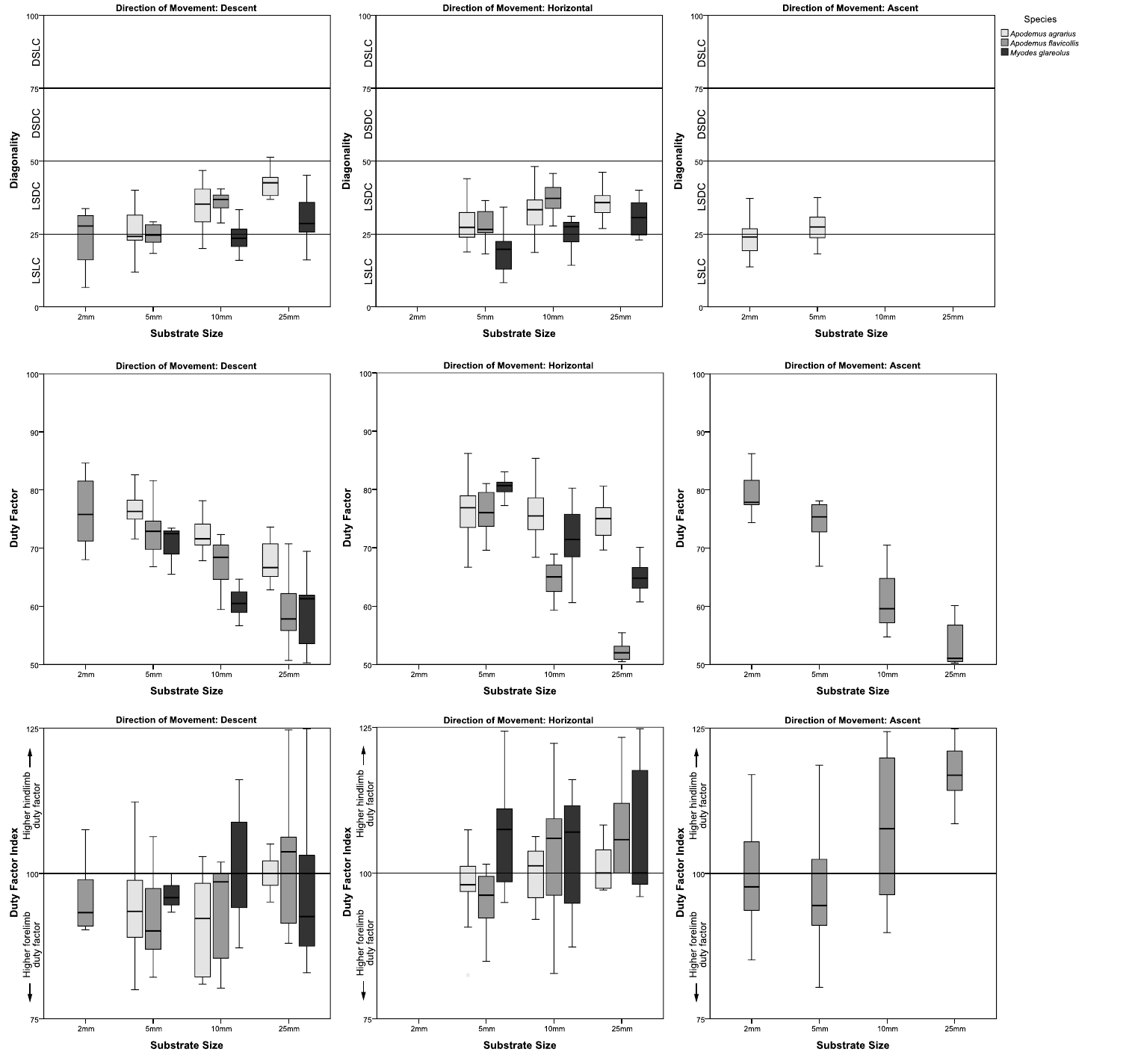
Vertical stratification of the arboreal habitat allows the coexistence of several species in a given area, because the complex arboreal strata can be used in different ways by arboreal and scansorial mammals. The present report experimentally investigated the gait metrics on different arboreal substrates, of three sympatric rodents living in a deciduous forest in Poznań, Poland. Arboreal locomotion was compared between the burrowing striped field mouse, Apodemus agrarius, the scansorial bank vole, Myodes glareolus, and the more arboreal yellow-necked mouse, Apodemus flavicollis. We filmed two wild-caught individuals from each species walking on four different substrate diameters (2 mm, 5 mm, 10 mm, 25 mm) and three different inclinations (45° descending, horizontal, 45° ascending) at 240 fps and collected a set of gait parameters from a total of 273 complete cycles. Our results did not demonstrate clear relationships between arboreal locomotion and the ecology of the three species. Only A. flavicollis exhibited locomotor features partly associated with arboreal competence, including lower velocity and diagonality on narrow substrates and asymmetrical gaits on wider ones. On the other hand, the two Apodemus species, despite their different ecologies, shared a few locomotor similarities, such as velocity regulation primarily by stride frequency, and similar effects of substrate size and inclination on diagonality, duty factor, and duty factor index indicating the possibility of a phylogenetic signal. Because the selected gait parameters provided limited insight into the ability of small mammals to move competently through an arboreal habitat, these findings indicate that the relationship between behaviour and ecology is complex.
Introduction
Arboreal and scansorial mammals have evolved to exploit the vertical stratification of forests in order to gain shelter from predators and timely access to specific resources (Hildebrand, 1995). This vertical stratification appears to accommodate a variety of sympatric small mammals exploiting the diversity of available arboreal substrates and resources (Galetti et al., 2016). The arboreal milieu is a complex, three-dimensional, discontinuous habitat with diverse substrates of variable size, orientation, fragility, stability, and length (Hildebrand, 1995). This complexity requires arboreal mammals to evolve diverse ways to grasp and move above, below, along, and across arboreal substrates in order to avoid potentially fatal falls. These constraints make arboreal locomotion and postures quite challenging (Cartmill, 1974; Grand, 1972).
In terms of locomotion, arboreal gaits function as a behavioural mechanism to enhance stability on arboreal substrates of different orientations (Lammers and Zurcher, 2011a; Schmidt and Fischer, 2011). Gaits can be either symmetrical, when the left and right limbs of a pair (i.e. forelimbs or hind limbs) alternate, or asymmetrical, when they move more or less concurrently. As in terrestrial locomotion, arboreal symmetrical gaits are best described by diagonality and duty factor. Diagonality, or forelimb-hind limb phase (Cartmill et al., 2007; Hildebrand, 1967) is the time between the footfall of a hind limb and the subsequent footfall of the ipsilateral forelimb measured in percentage of the stride cycle, and distinguishes diagonal sequence (DS) gaits (D > 50) from lateral sequence (LS) gaits (D < 50). Duty factor (DF) represents the percentage of a cycle during which a foot is in contact with the substrate and separates walking (DF > 50) from running (DF < 50) (Hildebrand, 1967). The duty factor index (DFI) indicates the differing role of fore- and hind limbs. DFI values of >100 indicates higher hind limb to forelimb stance duration, whereas DFI values of <100 represents increased forelimb to hind limb contact times. These parameters are of high interest, as they may reflect behavioural adaptations for locomotion on arboreal substrates (Cartmill et al., 2007, 2002).
Material and Methods
Specimens
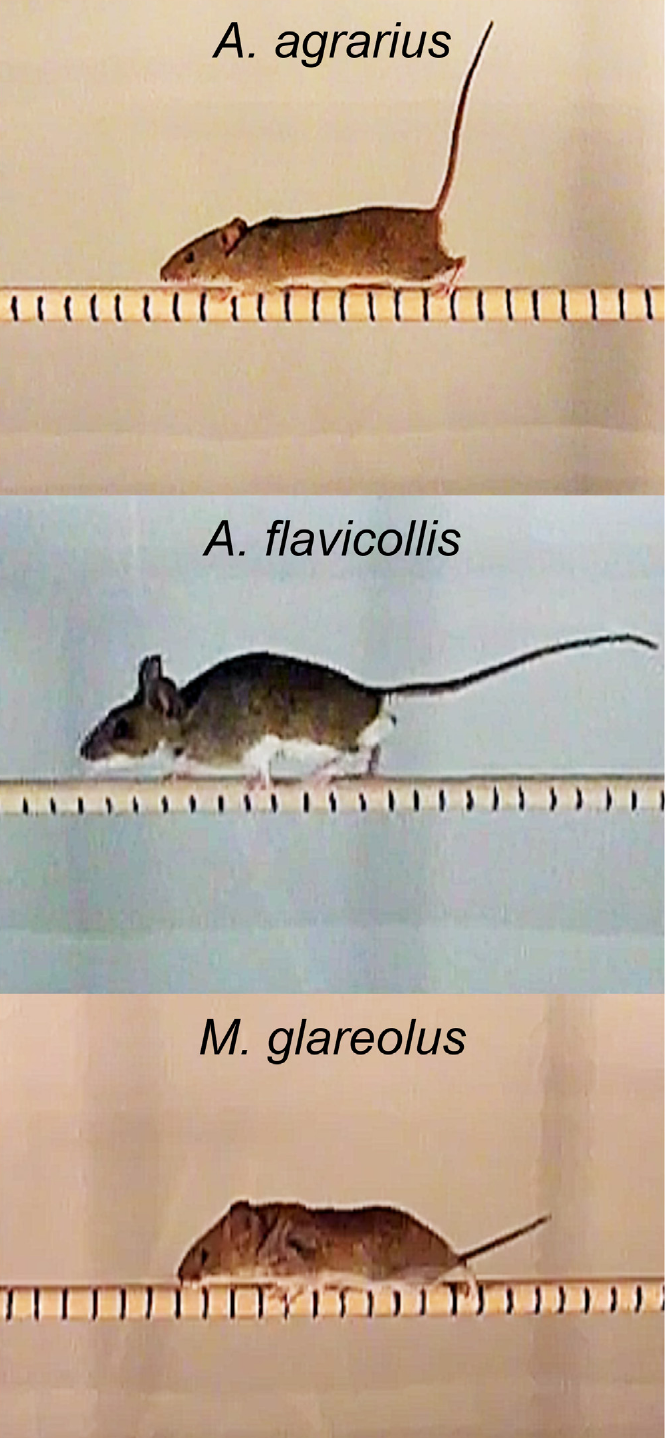
For the purposes of the current study, we tested one wild-caught adult male and one wild-caught adult female of each of three sympatric rodent species: Apodemus agrarius and Apodemus flavicollis (Murinae, Muridae, Rodentia), and Myodes glareolus (Arvicolinae, Cricetidae, Rodentia). All individuals were trapped in a deciduous forest around Lake Moraskie, close to the Morasko campus of the Adam Mickiewicz University (AMU) in Poznań, during June 2013. The trapped individuals were subsequently transported to laboratory facilities at the School of Biology of AMU.
Experimental Setup
For the locomotion experiments, we used a single, specially configured, filming glass terrarium (L: 90 cm x H: 40 cm x W: 40 cm), topped by a wooden cover. Inside the terrarium, we used poles of 80 cm long, composed of cylindrical semi-hardwood rods, which were supported by wooden frames on each end. All poles were marked with vertical blue lines every 1 cm for scaling purposes.
Gait Analyses
Video analysis and data collection, distance and time calculations were made by importing videos and calibrating time and distance measurements using Tracker 4.92 (Brown, 2009). Microsoft Excel 2010 (Redmond, WA, USA), and SPSS 23 (SPSS Inc., Chicago, IL, USA) were used for all statistical analyses.
Results
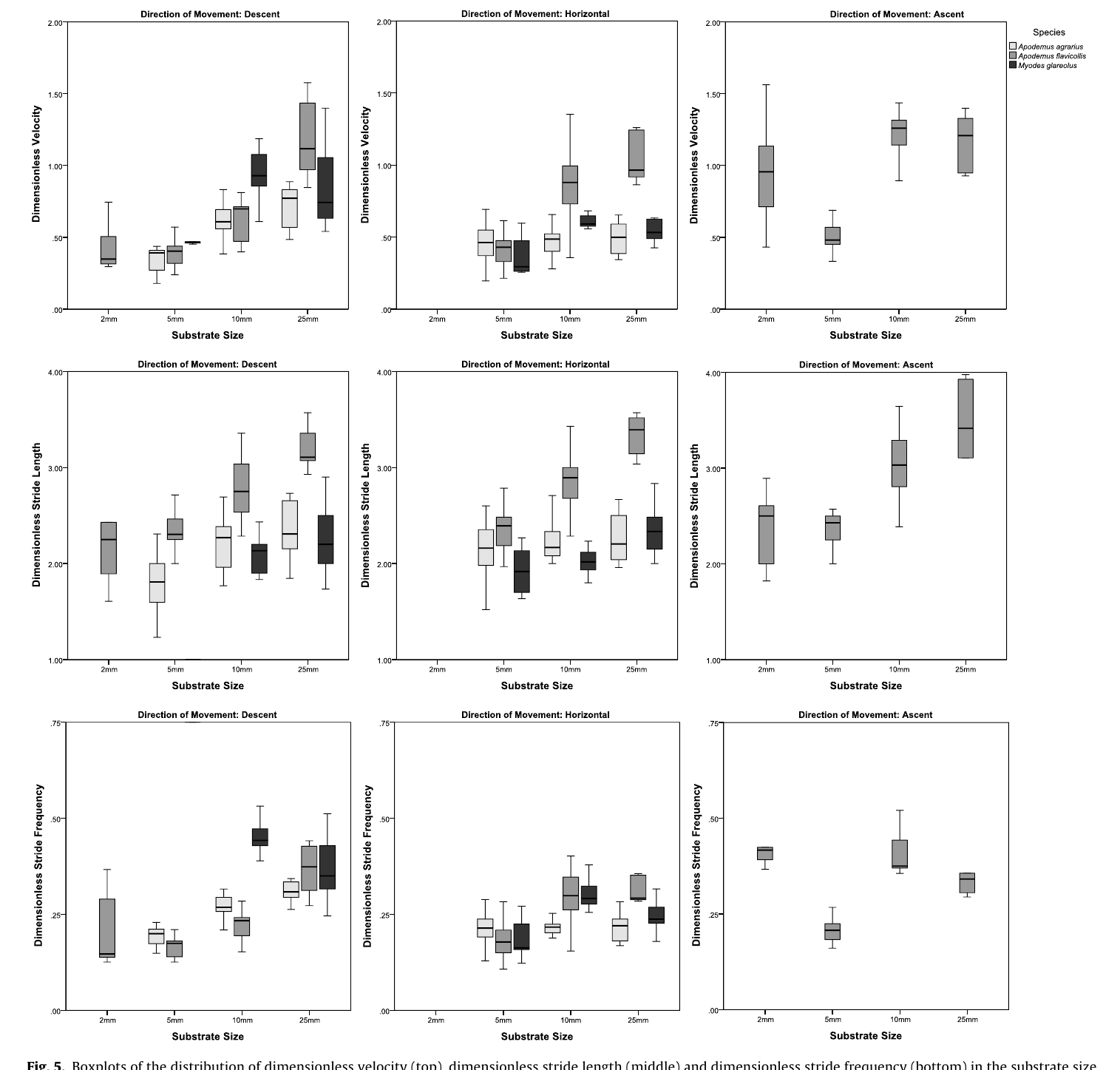
Despite the limited number of sampled animals, we recorded 273 complete gait cycles for all three species (A. agrarius, N = 93; A. flavicollis, N = 123; M. glareolus, N = 54). Out of this sample, we identified 226 symmetrical walking gaits (A. agrarius, N = 93; A. flavicollis, N = 79; M. glareolus, N = 54). Asymmetrical half-bounding gaits in which the hind limbs touched down simultaneously while one forelimb was trailing the other were recorded only for A. flavicollis (N = 44). Table 1 summarizes the breakdown of the absolute frequencies of these observations.
Table 1. Breakdown of symmetrical and asymmetrical gaits recorded per substrate category.
| Species | Gait Type | Descent 2mm | Descent 5mm | Descent 10mm | Descent 25mm | Horiz. 2mm | Horiz. 5mm | Horiz. 10mm | Horiz. 25mm | Ascent 2mm | Ascent 5mm | Ascent 10mm | Ascent 25mm |
|---|---|---|---|---|---|---|---|---|---|---|---|---|---|
| A. agrarius | Symmetrical | – | 15 | 10 | 24 | 9 | – | 17 | 18 | – | – | – | – |
| A. flavicollis | Symmetrical | 8 | 10 | 9 | – | 15 | 11 | – | – | 9 | 17 | – | – |
| A. flavicollis | Asymmetrical | – | – | – | 6 | 14 | 7 | – | – | 11 | 6 | – | – |
| M. glareolus | Symmetrical | – | 3 | 13 | 10 | 9 | – | 12 | 7 | – | – | – | – |
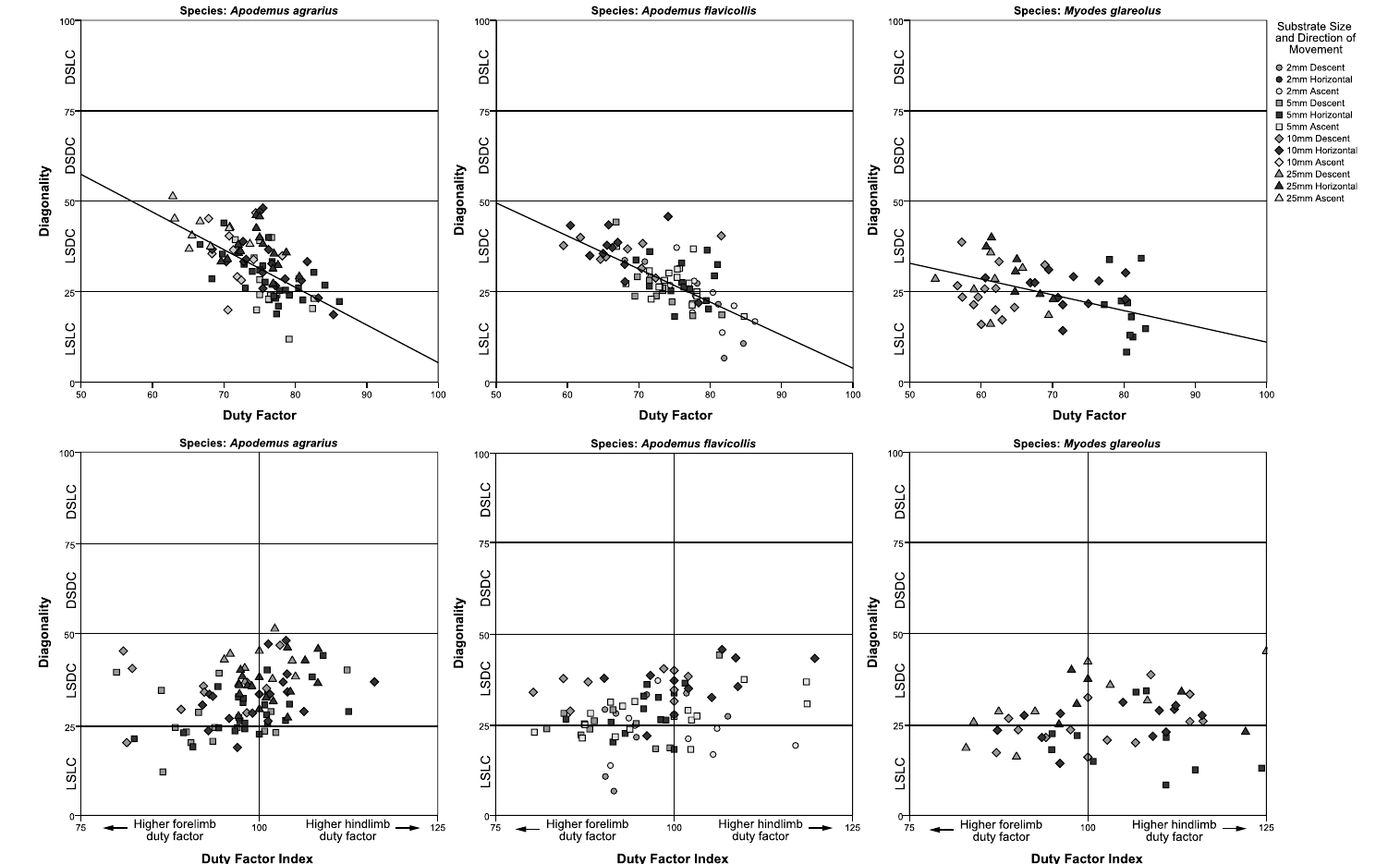
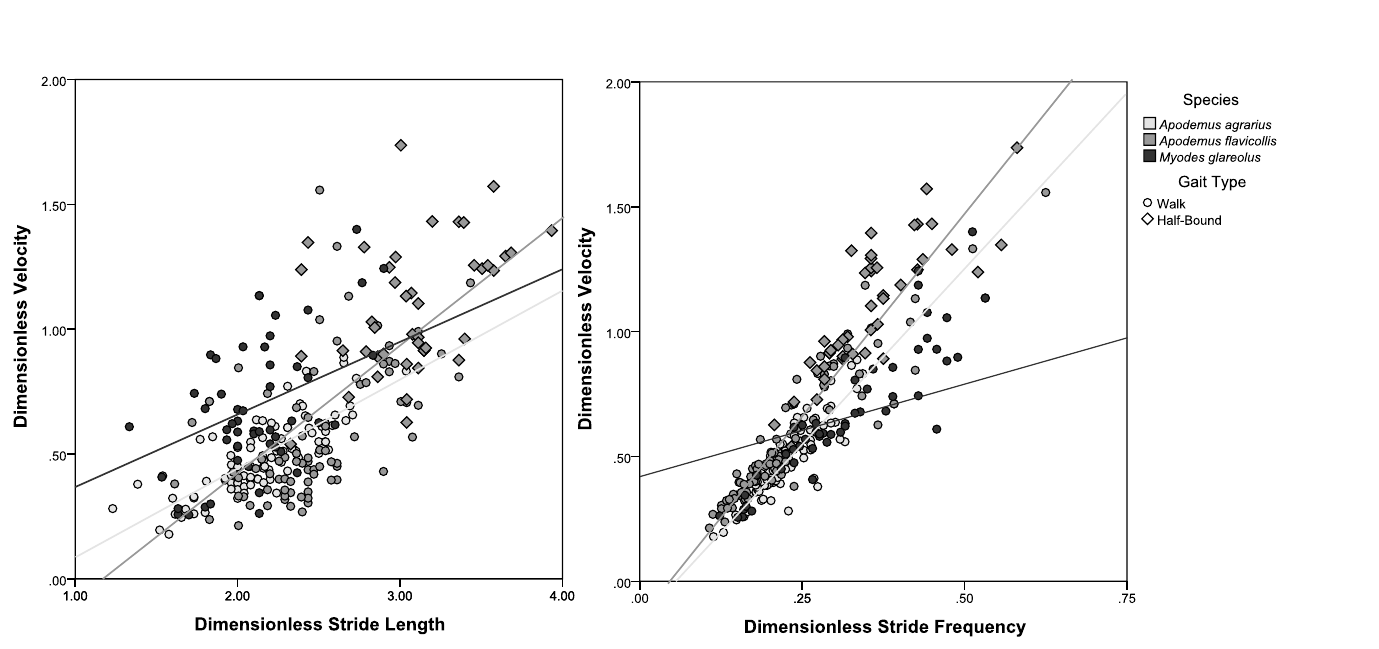
Table 2. Means and standard deviations of symmetrical and asymmetrical gait parameters.
| Species | Gait Type | N | Diagonality | Duty Factor | Hind limb DF | Forelimb DF | Stride Duration (s) | Stride Length (m) | Velocity (m/s) | Stride Frequency (Hz) | Duty Factor Index |
|---|---|---|---|---|---|---|---|---|---|---|---|
| A. agrarius | Symmetrical | 93 | 32.52 | 74.83 | 74.01 | 75.64 | 0.244 | 0.054 | 0.236 | 4.428 | 98.10 |
| A. flavicollis | Symmetrical | 79 | 28.77 | 73.77 | 72.41 | 75.13 | 0.264 | 0.093 | 0.374 | 4.365 | 96.78 |
| A. flavicollis | Asymmetrical | 44 | – | 58.84 | 60.99 | 56.69 | 0.148 | 0.097 | 0.582 | 6.558 | 108.42 |
| M. glareolus | Symmetrical | 54 | 25.86 | 67.40 | 68.35 | 66.45 | 0.225 | 0.074 | 0.355 | 5.784 | 103.22 |
Discussion
The species examined display morphological differences that are functionally linked to differential use of the habitat, with A. flavicollis being more arboreal, M. glareolus using both terrestrial and arboreal substrates, and A. agrarius being a mainly burrowing species. The vertical stratification of their activity is further marked when they engage in sympatric interspecific competition (Buesching et al., 2008; Holisova, 1969; Olszewski, 1968; Tattersall and Whitbread, 1994), implying that some may be more adept at exploiting arboreal pathways than others. In this context, gait metrics represent a useful tool to estimate arboreal locomotor capabilities (Camargo et al., 2016; Delciellos and Vieira, 2006; Schmidt and Fischer, 2011). In effect, our results demonstrated differences between the species, but relationships appeared to be more complex than expected.
Acknowledgements
All authors wish to express their gratitude to all the people who helped throughout this project: Peter Klimant for assistance in trapping and experiments, PhD students of the AMU for assistance in trapping, and Doug Brown for essential modifications to the Tracker software, which made data analysis possible.
Comments