Locomotion, Postures, Substrate Use, and Foot Grasping in the Marsupial Feathertail Glider Acrobates pygmaeus: Insights Into Early Euprimate Evolution
Youlatos, D., Moussa, D., Karantanis, N.-E., & Rychlik, L. (2018). Locomotion, postures, substrate use, and foot grasping in the marsupial feathertail glider Acrobates pygmaeus (Diprotodontia: Acrobatidae): Insights into early euprimate evolution. Journal of Human Evolution, 123, 148–159. https://doi.org/10.1016/j.jhevol.2018.07.007
Abstract
Debates on early euprimate evolution are related to understanding the ecological context that promoted their unique adaptations. Currently, these discussions mainly revolve around the habitual use of the small-branch niche or the frequent utilization of wider, and probably strongly inclined, substrates by euprimate ancestors. The current fossil evidence implies a diversity of arboreal quadrupedal behaviors for these early euprimates, associated with the use of various types of substrates. However, inferring the positional behavior of early euprimates based exclusively on fossils fails to unravel the positional flexibility in terms of modes and substrate use, which is important for understanding key adaptations related to limb postures. Following previous research, we studied the positional behavior, substrate use, and pedal grasping modes of the marsupial feathertail glider to investigate patterns of arboreal behavior that may be analogous to those exhibited by early euprimate ancestors. For the purposes of the current study, we observed and filmed 15 male and 20 female captive adult feathertail gliders Acrobates pygmaeus (Marsupialia: Diprotodontia: Acrobatidae) in a large enclosure in the Nocturnal Pavilion of Nowe Zoo, Poznań, Poland. Our observations demonstrated a strong preference for small and for horizontal substrates, avoidance of large and of vertical ones, a diverse positional repertoire mainly composed of quadrupedalism, clambering, climbing, and gliding, the last occurring from small and oblique and vertical substrates, and the dominant use of hallucal grasping, especially on small, horizontal, and oblique substrates. We thus consider that the generalized profile of A. pygmaeus could fit in a stage where the euarchontan heritage of vertical clawed activities on large substrates has decreased in favor of the use of small moderately inclined substrates efficiently negotiated by diagonal sequence quadrupedalism and handled via an apparently powerful hallucal grasp. Competent use of small substrates could have further expanded into small vertical substrates, which would progressively serve as new climbing platforms and takeoff perches for unspecialized leaping. We feel that this stage may have occurred early in euprimate evolution, as small body size likely provided the necessary behavioral flexibility to exploit various niches. Depending on alternative scenarios, it could represent that of the common ancestor of euprimates or be rooted at the base of strepsirrhine evolution. This study underscores the importance of analyzing the behavior of extant models to infer the locomotor evolution of euarchontans, primates, or euprimates.
Introduction
A major research goal of biological anthropology is to understand the behavioral and ecological contexts that are related to the evolution of the unique adaptations of euprimates (Soligo & Smaers, 2016). The most important of these shared features, which reflect the adaptive context of primate origins, include grasping feet and hands with flattened nails, versatile arboreal positional behavior, arboreal walking utilizing mainly diagonal sequence footfall patterns, significant development of functional stereoscopy through orbital convergence, further coupled with a large brain relative to body size, relatively small litters, and slow life history traits (Cartmill, 1972, 1974a, 1974b, 1992; Szalay & Dagosto, 1980, 1988; Gebo, 2004; Cartmill et al., 2007; Dagosto, 2007; Rasmussen & Sussman, 2007; Sargis et al., 2007; Szalay, 2007; Silcox et al., 2015). Many hypotheses have suggested that the morphological and behavioral features of euprimates evolved in small-bodied euarchontan mammals (e.g., Gebo, 2004; Silcox et al., 2007; Orkin & Pontzer, 2011; Silcox & Lopez-Torres, 2017; but see Soligo & Martin, 2006; Soligo & Smaers, 2016). It is possible that these ancestral forms traveled and foraged visually for fruit, flowers, and arthropods, using diverse locomotor and postural modes, which initially involved pedal and, subsequently, manual grasping, on relatively narrow flexible branches of tree crown peripheries and/or shrubs of tropical forests (Cartmill, 1974a, 1974b, 1992; Szalay & Dagosto, 1980, 1988; Rasmussen, 1990, 2002; Sussman, 1991, 1995; Bloch & Boyer, 2002; Gebo, 2004, 2009; Rasmussen & Sussman, 2007; Sargis et al., 2007; Silcox, 2007; Silcox et al., 2007; Youlatos, 2008; Orkin & Pontzer, 2011; Urbani & Youlatos, 2013). However, recent detailed morphofunctional studies have proposed that the common ancestor of euprimates may not have been a small-branch specialist, but rather a common user of wider, and probably strongly inclined, substrates (Boyer & Seiffert, 2013; Boyer et al., 2013, 2015, 2017; Yapuncich et al., 2017). This behavior, along with probable vertical substrate use, would have been retained from pre-euprimate euarchontans, while leaping specializations would go back to at least the ancestral euprimate. As such, small-branch use and associated positional behaviors may have developed or have been refined later, along different euprimate lineages (Boyer & Seiffert, 2013; Boyer et al., 2013, 2015, 2017; Yapuncich et al., 2017).
Fossil evidence of early euprimates partly supports these conclusions, indicating a diversity of arboreal quadrupedal behaviors, associated with the use of various types of substrates. The postcranium of one of the oldest euprimates, the European Donrusselia provincialis, has been functionally related to frequent use of relatively large substrates through quadrupedalism, clinging, and probably leaping activities (Boyer et al., 2017). In an analogous manner, the postcranial morphology of one of the oldest omomyids, the European Teilhardina belgica, suggests frequent leaping, arboreal quadrupedalism, climbing, and grasping on both larger and smaller substrates (Gebo et al., 2015). Similarly, one of the oldest known haplorhines, the Asian Archicebus achilles, has been reconstructed as a relatively generalized arboreal quadruped with increased faculties for leaping (Ni et al., 2013). Active arboreal quadrupedal locomotion, including occasional leaping, has also been proposed for other early Eocene Asian adapids and early omomyids (Rose et al., 2009; Dunn et al., 2016). Comparable positional profiles have been suggested for many non-euprimate euarchontans. The pedal morphology of the basal plesiadapiform Purgatorius reflects the efficient use of both larger and smaller branches (Chester et al., 2015). This also appears to be the profile of the plesiadapiform Carpolestes simpsoni, whose skeleton suggests adaptations for claw-climbing on large tree trunks, as well as hallucal grasping on small branches of tree peripheries (Bloch & Boyer, 2002, 2007). Similarly, other small-bodied plesiadapiforms, such as several paromomyids and micromomyids, are claimed to have been habitual large-branch quadrupedal climbers and clingers (Bloch & Boyer, 2007; Boyer & Bloch, 2008; Chester et al., 2017). However, reconstructing the positional behavior of early euprimates based exclusively on fossil evidence fails to unravel the positional flexibility in terms of modes and substrate use, which is important for understanding key adaptations related to limb postures. This drawback has compelled researchers to adopt extant analogs, i.e., living models that share at least some of the features that characterize modern euprimates, to test or propose hypotheses. These hypotheses can be subsequently tested using the fossil record: the identification of convergent attributes in phylogenetically distant taxa can provide evidence for functional-adaptive modifications (Szalay, 2007). Living models range from Neotropical and Australian marsupials to treeshrews, squirrels, and arboreal mice (Rasmussen, 1990; Cartmill, 1992; Lemelin, 1999; Sargis, 2001; Cartmill et al., 2002; Schmitt & Lemelin, 2002; Lemelin et al., 2003; Gebo, 2004; Rasmussen & Sussman, 2007; Youlatos, 2008; Samaras & Youlatos, 2010; Shapiro & Young, 2010; Byron et al., 2011; Orkin & Pontzer, 2011; Urbani & Youlatos, 2013; Shapiro et al., 2014; Karantanis et al., 2015).
In this context, we advocate that extant small-bodied arboreal mammals may represent reliable models for investigating patterns of arboreal behavior that may be comparable to that exhibited by euprimate ancestors. Primarily, a small body mass has significant implications related to locomotion, postures, diet, ecology, social behavior, physiology, life history, and demography (Churchfield, 1996; Gebo, 2004; Bernstein, 2010). Secondarily, the current fossil evidence supports a relatively low body mass (20–150 g) for early primates, such as Purgatorius, Carpolestes, some Microsyopidae, most Micromomyidae, and early euprimates, such as Altanius, Altiatlasius, Teilhardina, and Donrusselia (Gebo et al., 2000; Egi et al., 2004; Gebo, 2004; Bloch & Boyer, 2007; Silcox et al., 2007, 2015, 2017; Bajpai et al., 2008; Silcox & Lopez-Torres, 2017). The present study uses the marsupial feathertail glider Acrobates pygmaeus as a model, following previous work that showed the use of diagonal-sequence diagonal couplets gaits, especially on the finest and inclined substrates, and velocity regulation by stride frequency and stride length, in convergence with primates (Karantanis et al., 2015). Feathertail gliders weigh around 10–15 g, are nocturnal and arboreal, inhabiting subtropical, temperate, and mature woodlands of eastern Australia (Ward & Woodside, 2008; Harris, 2015). They feed and forage mainly on fruit, honeydew, pollen, and arthropods (Goldingay & Kavanagh, 1995; Harris, 2015). They are capable of short and long glides at relatively low aerial velocities and increased maneuverability (Pridmore & Hoffmann, 2014). They possess an opposable clawless hallux, capable of efficient grasp, and digital volar pads, with extensive sweat glands, for increased adhesion on all types of surfaces, even glass panes (Rosenberg & Rose, 1999). Finally, feathertail gliders have small litters, slow growth, and high maternal investment, which continues after weaning (Ward, 1990), similar to extant primates.
Considering the adaptations of A. pygmaeus, the current study aims to investigate whether the positional behavior, substrate use, and pedal prehension of these tiny arborealists could inform us on hypothetical stages in early euprimate locomotor evolution. Links between locomotion, postures, foot grasping, and substrate use are fundamental for understanding the evolutionary-adaptive processes that are related to euprimate evolution (Sussman, 1991; Cartmill, 1992; Gebo, 2004; Rasmussen & Sussman, 2007; Szalay, 2007; Silcox et al., 2015). Therefore, this study aims to test: (a) whether small arboreal mammals with grasping extremities employ a flexible positional behavior (composed of a mixture of quadrupedalism, climbing, clambering, and leaping), as has been previously shown and as has been suggested for early primates and euprimates, (b) whether small arboreal mammals with grasping extremities use and prefer narrow substrates, as has been previously shown and as has been partly hypothesized for early euprimates, (c) whether hallucal grasping is associated with the frequent use of small substrates, as promoted by scenarios of euprimate evolution, and if these substrates are strongly or moderately inclined, inferring alternative ways of locomotor adaptations, and (d) whether leaping activities initiate and terminate mainly on vertical substrates, and whether substrate size determines different ways of positional grasping, crucial for the negotiation of such constraining substrates.
Materials and Methods
Study Animals
For the purposes of the current study, we observed and filmed 15 male and 20 female captive feathertail gliders A. pygmaeus. All study animals were captive-born and housed in the Nocturnal Pavilion of Nowe Zoo, Poznań, Poland. As they are part of the display colonies of the Zoo, they are fully habituated to human presence, and did not display any stereotypical or stressful behaviors at the time of observation. All studied subjects were adults. Mean body mass of the studied animals was 12.00 ± 1.23 g, as measured from a subset (n = 18) of the sampled animals.
Experimental Setup and Data Collection
The animals inhabited a large enclosure (height = 190 cm, width = 300 cm, depth = 140 cm) under a reversed day-night regime. The enclosure was surrounded by a glass window, backed by cement and topped by wire mesh. It contained a wide variety of available substrates of diverse sizes (from <5 mm to >10 cm) and inclinations (horizontal to vertical), enabling the gliders to move freely in an enriched environment. These substrates involved branches, nest boxes, wire mesh, bars, the window pane, as well as hanging cylindrical feeders that assured regular ad libitum feeding of the study animals. Despite the diversity of substrate availability, substrates in an artificial enclosure are always expected to limit the positional options of caged animals. In this case, an estimate of substrate availability allows for a controlled test of substrate preference or avoidance. Therefore, we calculated all available substrates by unit (n = 1155) and estimated the availability of the different size and inclination categories (see Table 1 for definitions). Small substrates dominated (45.6%), medium and large ones were similarly represented (22.3% and 20.0%, respectively), whereas very large substrates represented 12.1% of all available substrates. Regarding substrate inclination categories, oblique substrates represented more than half of available substrates (54.6%), whereas horizontal and vertical ones were less available (20.9% and 24.5%, respectively). Preference or avoidance of these categories was then estimated by Jacobs’ D value: D = (U − A)/(U + A − 2U × A), where U is the proportion of use, and A is the proportion of availability (Jacobs, 1974). Values of the index range from −1, depicting strong avoidance, to +1, showing strong preference, whereas values around 0 are considered as neutral.
The present data were derived from the analysis of video recordings of the study animals. For the experimental procedure, the Nowe Zoo administration granted a research permit to film the animals in situ between February and May 2013, during the days when the Zoo was closed to the general public. This allowed easy and uninterrupted access to the animal enclosure without external disturbance. For these administrative reasons, the animals were filmed twice per week from 10:00 to 17:00, using additional infrared lighting. During video recording sessions we used a SONY Hi-8 CCD-TR705E camcorder, at 24 fps and at a shutter speed of 1/500th. As in previous work (e.g., Youlatos, 2008; Karantanis et al., 2015), this filming procedure provides good quality recordings for subsequent fine-grained video analysis of locomotor and grasping modes. The original Hi-8 tapes, totaling 14 h of recordings, were digitized and were subsequently analyzed on a PC for data collection.
During video analyses, we used 10 s scan sampling for data collection from all visible individuals (Martin & Bateson, 1993). This time lapse was estimated as sufficient for independent events of locomotor and postural behavior for very small mammals sharing the same enclosure. During each scan instant we recorded: (a) behavioral context, (b) substrate size, (c) substrate inclination, (d) locomotor or postural mode (Figure 1), and (e) pedal grasping mode. Table 1 summarizes the different categories for all variables. Substrate size categories were defined in respect to the size of the grasping foot (see also Urbani & Youlatos, 2013; Youlatos et al., 2015). Furthermore, although positional modes and substrate usually relate to behavioral contexts (e.g., feeding, traveling, etc.) in the wild, a captive setting with its spatial limitations and specific feeding conditions usually modifies and biases similar associations.
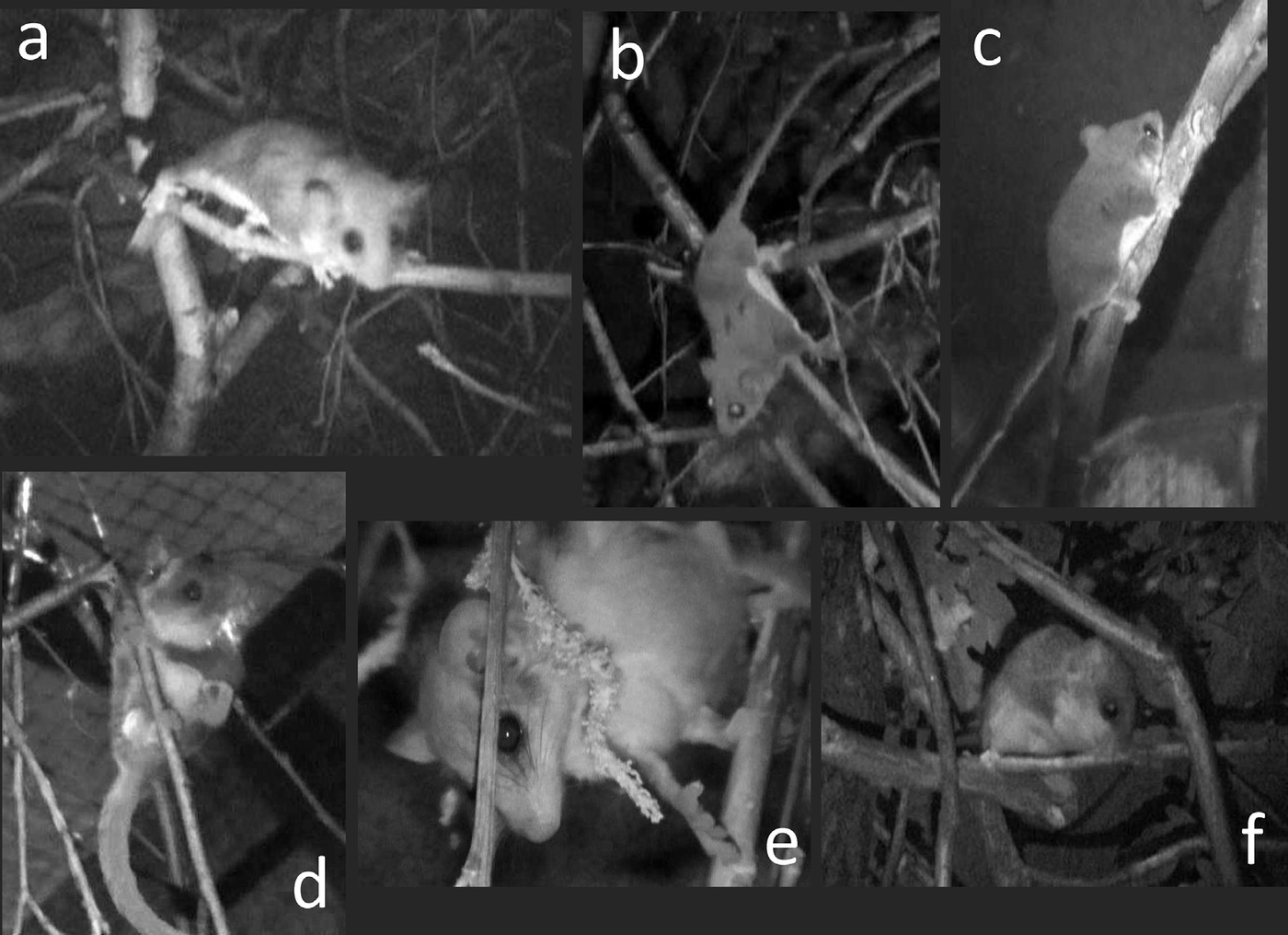
Table 1. Definition and description of the recorded variables for Acrobates pygmaeus.
| Category | Variant | Description |
|---|---|---|
| Substrate size | Small | Diameter ≤ 5 mm (twigs, wire mesh) |
| Medium | Diameter > 5 mm ≤ 2 cm (branches, feeders) | |
| Large | Diameter > 2 cm ≤ 5 cm (large branches, cage bars) | |
| Very large | Diameter > 5 cm (boughs, window pane) | |
| Substrate inclination | Horizontal | Angle between 0° and 22.5° |
| Oblique | Angle between 22.5° and 67.5° | |
| Vertical | Angle between 67.5° and 90° | |
| Locomotion | Quadrupedalism | Symmetrical slow or fast quadrupedal progression along single horizontal and moderately inclined substrates |
| Clambering | Irregular pronograde quadrupedal progression in various directions on and across multiple substrates | |
| Climbing | Upward (ascent) or downward (descent) body displacement along single steep or vertical substrates using a regular quadrupedal gait | |
| Bridging | Short gap crossing mode, reaching with the body and keeping at least three limbs (including the tail) anchored | |
| Suspensory locomotion | Below-branch quadrupedal locomotion, involving inverted walk below single branches and inverted clamber below multiple branches | |
| Gliding | Gap crossing mode initiating with strong flexion of hind limbs and involving an airborne phase with the body held horizontally or inclined and the patagium variably spread | |
| Posture | Sitting | Above-branch bipedal pronograde or orthograde seated posture with strongly flexed hind limbs |
| Standing | Above-branch quadrupedal posture with either strongly flexed (i.e., crouched) or semiextended three or four limbs | |
| Bipedal standing | Above-branch standing on two moderately flexed limbs assisted by forelimbs | |
| Clinging | Upward or downward clinging along vertical or steep substrates | |
| Cantilevering | Feet anchor the lower body to a substrate of variable inclinations while the trunk and the forelimbs are kept extended | |
| Suspensory postures | Below-branch hanging postures with the body supported mainly by the hind feet only, or combinations of hind and fore-feet and tail | |
| Pedal grasp mode | Hallucal grasp | Pedal grasp where the adducted and apparently medially rotated hallux is opposed to the lateral digits; the proximal foot is usually (but not necessarily) elevated from the substrate |
| Adducted grasp | Pedal grasp where all digits adduct and converge to the median axis of the foot and fully or partially embrace the substrate; the hallux remains aligned to the lateral digits | |
| Abducted grasp | Pedal grasp with abducted and mainly extended toes applying force by the enlarged and wet apical pads; again, the hallux remains aligned to the lateral digits | |
| Claw grasp | Claws embedded on the substrate with all toes held in an adducted or slightly abducted position |
Data Analysis
At the end of the sampling process, the total of collected instants of locomotor and postural behavior was derived from the observational recording of the 35 different individual gliders. As we were not certain of the identity of the sampled animals, all the collected data for all study subjects were combined for subsequent analyses. A common problem in similar studies of positional behavior is the autocorrelation of successive sampling events. This occurs because subsequent samples of the same individuals usually lack independence from previous observations (Dawkins, 2007). In order to address this shortcoming and safely guarantee independence, we followed a trimming procedure (Youlatos & Samaras, 2010). Initially, the complete dataset was divided into locomotor and postural subsets. Then, in each subset, we considered only every second instant (i, i+2), deleting each intermediate one (i+1). Following this trimming procedure, we obtained a total of 1095 counts of locomotion and 1806 counts of postures. Differences among frequencies of behaviors or substrate use were calculated using log-likelihood G tests (Mehta & Patel, 1995). P-values of 0.05 or less were regarded as statistically significant and only those are reported in the results section. The present research followed the guidelines for the treatment of animals in behavioral research and teaching (ASAB/ABS, 2012) and complied with relevant regulations and legislations applying to the Nowe Zoo, the Adam Mickiewicz University in Poznań, and the Aristotle University of Thessaloniki.
Results
General Profile
Feathertail gliders traveled actively in all parts of the enriched environment of their enclosure (43.5% of all recorded counts, n = 2899). Feeding bouts accounted for 11.1% of observations, slightly higher than social interactions (10.4%). Resting, including both short-term inactivity as well as long-term bouts of immobility, represented 35.0% of the recorded bouts (n = 2899).
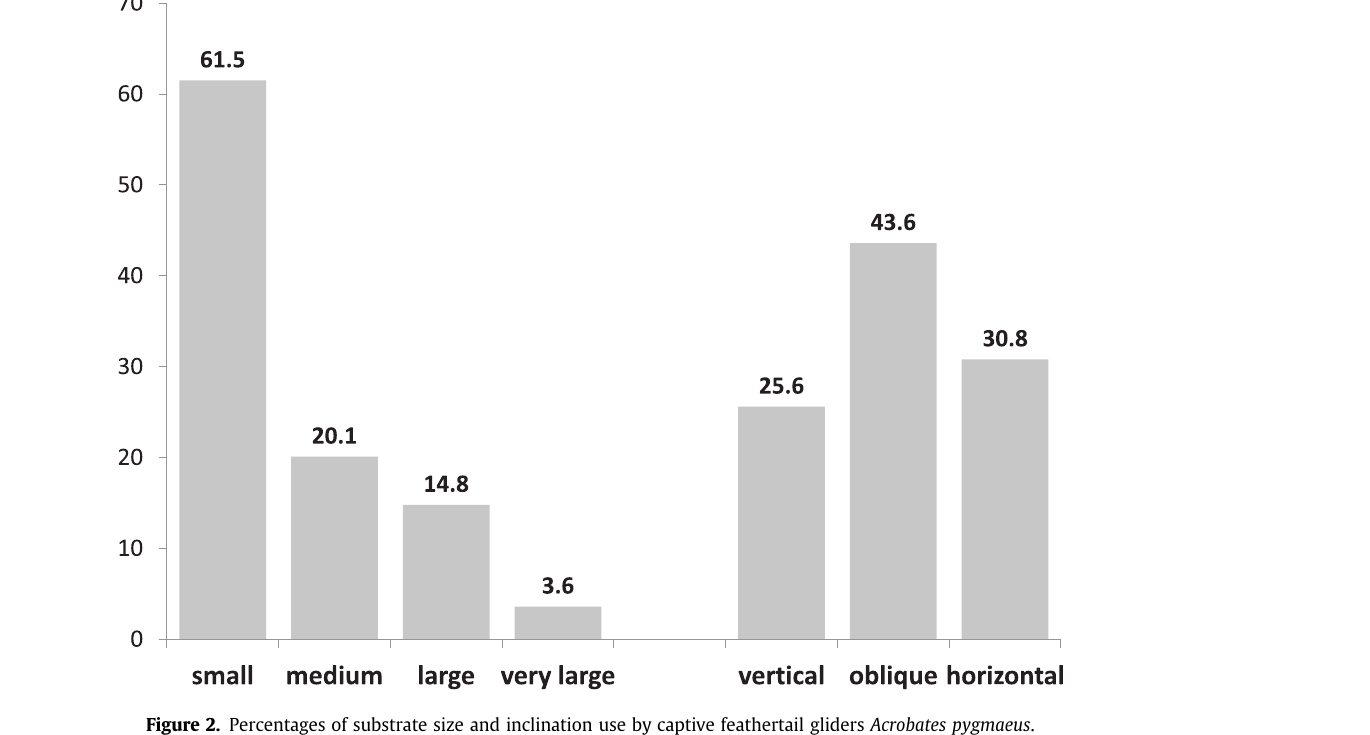
In terms of substrate size (Figure 2), small substrates were largely used and preferred (61.5%, D = 0.311). Medium-sized substrates were moderately used and very slightly avoided (20.1%, D = −0.065). In contrast, large and very large substrates were used less and were moderately and strongly avoided, respectively (large: 14.8%, D = −0.179; very large: 3.6%, D = −0.579). Regarding substrate inclination (Figure 2), oblique substrates, although frequently used, were basically avoided (43.6%, D = −0.218). On the other hand, horizontal substrates were less used but preferred (30.8%, D = 0.254), whereas vertical substrates were only moderately used and slightly avoided (25.6%, D = −0.028).
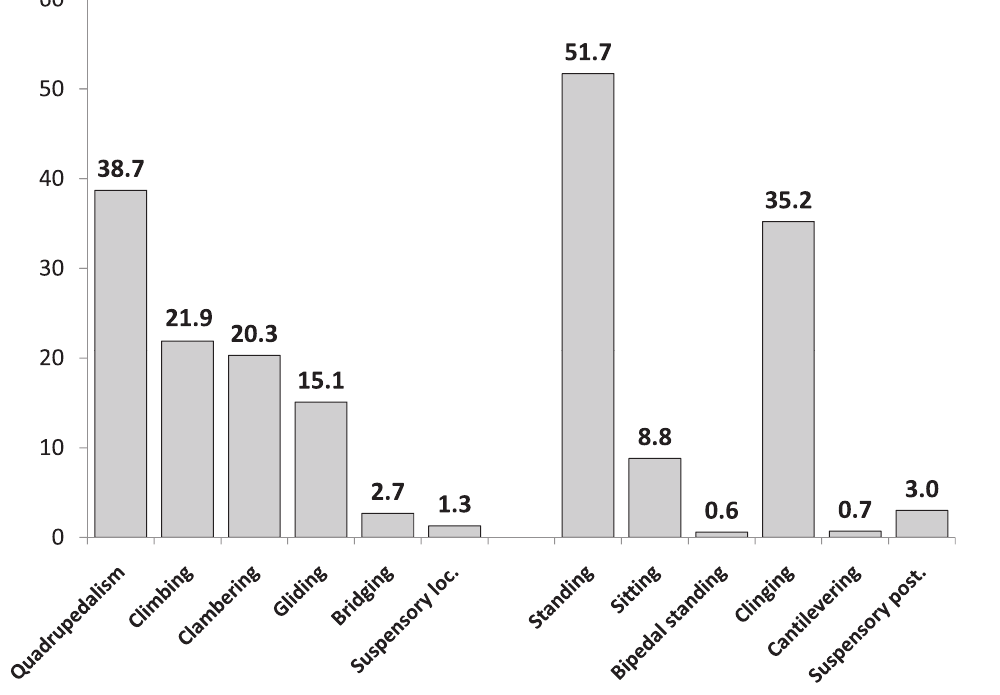
During locomotor behavior, quadrupedalism was the most frequent mode (38.7%; Figure 3). During quadrupedal bouts, feathertail gliders were fast, with runs used almost twice as often as walks (66.9% vs. 33.1% of quadrupedal subsample, n = 424). Runs were differentiated from walks by observing a visible aerial phase (duty factor < 50). Both walking and running were symmetrical, involving evenly spaced regular swing and stance phases and we never observed any bounding. Vertical climbing and clambering were practiced in roughly equal proportions (Figure 3). As was true for quadrupedalism, all vertical climbing bouts involved regular swing and stance phases and we never observed any bounding. Vertical descents were slightly more frequent than ascents (55.4% of vertical climbing subsample, n = 240). Clambering was usually fast and was achieved by irregular and usually abducted limb excursions. Horizontal, downwards, and upwards clambering were almost equally used (34.3%, 33.7%, and 32.0%, respectively, of clamber subsample, n = 222). Gliding was moderately used (15.1%; Figure 3). Due to the confined space of the enclosure feathertail gliders did not perform regular glides but their airborne mode was more similar to leaping. This was initiated by synchronous extreme flexion of the hind limbs, followed by extension to push the body upwards and horizontally. During the relatively short airborne phase, limbs were laterally spread and the patagium unfolded. Mean distance of glides was 19.4 ± 10.4 cm (n = 165). Sixty-eight percent of recorded glides were short (<20 cm) and only 2.7% were >50 cm. The main direction of the glides was upwards, with horizontal ones being less frequent (58.2% and 24.8%, respectively of all glides, n = 165). Finally, bridging and suspensory locomotion were infrequent (Figure 3).
During postural behavior, standing was by far the dominant posture (51.7%; Figure 3). In most standing postures, feathertail gliders adopted a crouched position with strongly flexed limbs (80.7% of standing postures, n = 934). Clinging on vertical and inclined substrates was the second most frequent posture (Figure 3). Downward clinging postures (72.1% of clinging postures, n = 635) dominated over upward clinging ones. Sitting was infrequent and suspensory postures were used even less (Figure 3).
Substrate Size Use During Locomotor and Postural Behavior
Regarding substrate size, small substrates were used very frequently during locomotion with other size categories being moderately used (Table 2). A similar profile emerged during postural behavior, with the exception of the significantly low use of very large substrates in postures (Table 2; G = 17.10, p = 0.0001).
Table 2 analyzes substrate size use in relation to different locomotor and postural modes. Small substrates were almost exclusively used during clambering and represented a very important percentage during bridging. Rates of small substrate use were significantly lower, but still high, during quadrupedalism and gliding (Table 2; clambering vs. quadrupedalism: G = 78.38, p < 0.001; clambering vs. gliding: G = 96.61, p < 0.001; clambering vs. suspensory locomotion/bridging: G = 19.43, p = 0.0002; suspensory locomotion/bridging vs. quadrupedalism: G = 20.75, p < 0.001; suspensory locomotion/bridging vs. gliding: G = 22.14, p < 0.001; quadrupedalism vs. gliding: G = 28.66, p < 0.001). In gliding, small substrates dominated as both initial and terminal substrates, resulting in similar size use profiles (G = 2.10, p = 0.580). On the other hand, during vertical climbing, large and, to a lesser extent, very large substrates dominated, with small and medium ones being significantly less used (Table 2; climbing vs. quadrupedalism: G = 289.2, p < 0.001; climbing vs. clambering: G = 283.9, p < 0.001; climbing vs. gliding: G = 157.1, p < 0.001; climbing vs. suspensory locomotion/bridging: G = 88.45, p < 0.001).
During standing and sitting, small substrates largely dominated (Table 2; standing vs. sitting: G = 7.81, p = 0.054). Comparable rates were also observed during suspensory postures (Table 2; standing vs. suspensory postures: G = 10.5, p = 0.014; sitting vs. suspensory postures: G = 3.027, p = 0.2476). However, in clinging postures, the percentage of small substrates decreased significantly with an equally significant increase of large substrates (Table 2; clinging vs. standing: G = 235.5, p < 0.001; clinging vs. sitting: G = 92.71, p < 0.001; clinging vs. suspensory postures: G = 49.29, p < 0.001).
Table 2. Percentages of use of substrate size categories in different locomotor and postural modes in Acrobates pygmaeus (n corresponds to the number of observations in each category).
| Size | Quadrupedalism | Climbing | Clambering | Gliding | Susp. loc./Bridging | Total (Locomotion) | Standing | Sitting | Clinging | Susp. postures | Total (Postures) |
|---|---|---|---|---|---|---|---|---|---|---|---|
| Small | 69.6 | 25.2 | 98.2 | 63.3 | 83.3 | 62.6 | 70.1 | 78.0 | 39.7 | 87.0 | 60.8 |
| Medium | 23.8 | 13.5 | 1.2 | 22.8 | 4.2 | 16.6 | 22.5 | 16.3 | 25.0 | 7.4 | 22.3 |
| Large | 6.4 | 35.2 | 0.6 | 7.6 | 11.1 | 13.4 | 6.0 | 5.7 | 33.9 | 5.6 | 15.7 |
| Very large | 0.2 | 26.2 | 0.0 | 6.3 | 1.4 | 7.4 | 1.4 | 0.0 | 1.4 | 0.0 | 1.2 |
| n | 424 | 238 | 222 | 135 | 72 | 1091 | 934 | 159 | 635 | 54 | 1806 |
Substrate Inclination Use During Locomotor and Postural Behavior
Regarding substrate inclination, oblique substrates accounted for almost half of all locomotor counts, with vertical substrates ranking second (Table 3). In contrast, oblique and horizontal substrates were frequently and more or less equally used during postural behavior, with a significant decrease of vertical ones (Table 3; G = 70.39, p < 0.001).
Quadrupedalism, clambering, and suspensory locomotion/bridging occurred very frequently on oblique substrates, with horizontal ones used much less (Table 3; quadrupedalism vs. clambering: G = 59.71, p < 0.001; quadrupedalism vs. suspensory locomotion/bridging: G = 40.5, p < 0.001; clambering vs. suspensory locomotion/bridging: G = 13.66, p = 0.002). During gliding, vertical substrate use significantly increased, whereas use of oblique substrates decreased significantly (Table 3; gliding vs. quadrupedalism: G = 220.7, p < 0.001; gliding vs. clambering: G = 45.09, p < 0.001; gliding vs. suspensory locomotion/bridging: G = 17.18, p = 0.0003). On the other hand, gliding terminal substrates were mainly oblique (60.9%), whereas the use of vertical and horizontal substrates decreased (20.3% and 18.7%, respectively), but differences were insignificant (G = 5.817, p = 0.052). Finally, climbing occurred primarily on vertical and, to a lesser extent, oblique substrates (Table 3; climbing vs. quadrupedalism: G = 853.9, p < 0.001; climbing vs. clambering: G = 384.8, p < 0.001; climbing vs. gliding: G = 287.8, p < 0.001; climbing vs. suspensory locomotion/bridging: G = 223.4, p < 0.001).
Horizontal substrates dominated in standing and suspensory postures and were exclusively used in sitting (Table 3; standing vs. sitting: G = 189.7, p < 0.001; standing vs. suspensory postures: G = 8.118, p = 0.021; sitting vs. suspensory postures: G = 61.49, p < 0.001). In contrast, clinging postures were used on both vertical and oblique substrates (Table 3; clinging vs. standing: G = 868.4, p < 0.001; clinging vs. sitting: G = 795.2, p < 0.001; clinging vs. suspensory postures: G = 232.0, p < 0.001).
Table 3. Percentages of use of substrate inclination categories in different locomotor and postural modes in Acrobates pygmaeus (n corresponds to the number of observations in each category).
| Inclination | Quadrupedalism | Climbing | Clambering | Gliding | Susp. loc./Bridging | Total (Locomotion) | Standing | Sitting | Clinging | Susp. postures | Total (Postures) |
|---|---|---|---|---|---|---|---|---|---|---|---|
| Horizontal | 25.2 | 0.0 | 16.5 | 26.3 | 38.9 | 21.7 | 51.4 | 100.0 | 0.0 | 63.0 | 36.3 |
| Oblique | 74.8 | 6.9 | 70.6 | 39.9 | 50.0 | 48.8 | 42.4 | 0.0 | 43.8 | 37.0 | 40.5 |
| Vertical | 0.0 | 93.1 | 12.9 | 33.9 | 11.1 | 29.4 | 6.2 | 0.0 | 56.2 | 0.0 | 23.2 |
| n | 424 | 238 | 222 | 135 | 72 | 1091 | 934 | 159 | 635 | 54 | 1806 |
Pedal Grasping
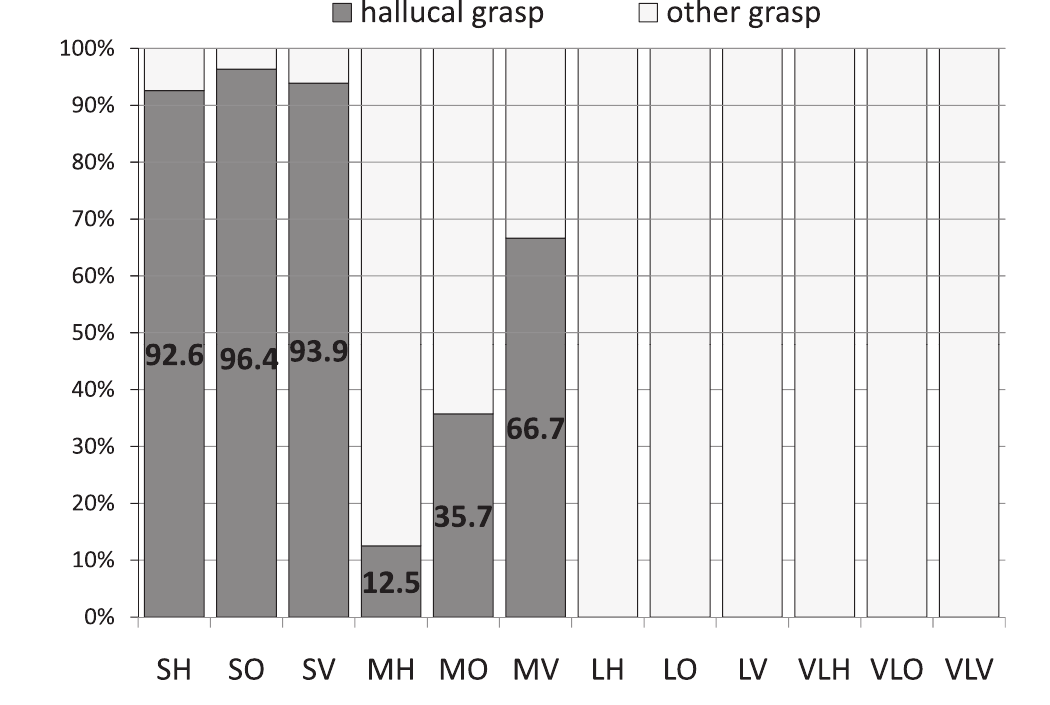
Our observations showed that hallucal grasping was the principal pedal grasping mode (62.8%), with adducted grasping ranking second (23.3%). The abducted grasp was much less used (13.4%), and claw use was rare (0.9%). Regarding substrate size, hallucal grasping was used almost exclusively on small substrates, while adducted grasping was preferred on medium substrates (Table 4; small vs. medium: G = 662.1, p < 0.001). Furthermore, large substrates were grasped mainly by the adducted and the abducted modes, the latter being the most frequent grasping mode on very large substrates (Table 4; small vs. large: G = 1514, p < 0.001; medium vs. large: G = 1202, p < 0.001; large vs. very large: G = 586.8, p < 0.001). The abducted grasp was also the most frequent mode on vertical substrates, with adducted and hallucal grasping being used at low rates (Table 4). In contrast, hallucal grasping was very important on horizontal and oblique substrates (Table 4; vertical vs. horizontal: G = 341.7, p < 0.001; vertical vs. oblique: G = 550.7, p < 0.001; horizontal vs. oblique: G = 71.35, p < 0.001). These findings are further substantiated when considering the combinations of substrate sizes and inclinations (Figure 4). Hallucal grasping was dominant on small substrates, irrespective of inclination, but it was never used on any inclination of large and very large substrates. Interestingly, its use increased with increasing inclination on medium-sized substrates (Figure 4).
Table 4. Percentages of use of pedal grasping modes on different substrate size and inclination categories in Acrobates pygmaeus (n corresponds to the number of observations in each category).
| Grasp mode | Small | Medium | Large | Very large | Horizontal | Oblique | Vertical |
|---|---|---|---|---|---|---|---|
| Hallucal | 94.0 | 10.1 | 0.0 | 0.0 | 80.2 | 76.9 | 25.8 |
| Adducted | 5.99 | 88.0 | 50.2 | 7.1 | 13.2 | 22.9 | 33.3 |
| Abducted | 0.0 | 0.0 | 48.9 | 89.9 | 5.8 | 0.0 | 40.1 |
| Clawed | 0.0 | 1.9 | 0.9 | 3.0 | 0.8 | 0.2 | 0.8 |
| n | 1169 | 208 | 307 | 99 | 499 | 761 | 523 |
Hallucal grasping was also the dominant mode during both postural and locomotor behavior, but was significantly more frequent during postures (Table 5; locomotion vs. postures: G = 32.31, p < 0.001). In effect, hallucal grasping was the main grasping mode in most locomotor modes, scoring the highest rates in clambering and bridging/suspensory locomotion (Table 5). The use of hallucal grasping was significantly lower during gliding (in takeoff and/or landing) and quadrupedalism, and even lower in climbing, where the abducted grasp dominated (Table 5; clambering vs. bridging: G = 11.51, p = 0.003; clambering vs. quadrupedalism: G = 50.51, p < 0.001; clambering vs. gliding: G = 29.04, p < 0.001; climbing vs. quadrupedalism: G = 225.9, p < 0.001; climbing vs. clambering: G = 258.2, p < 0.001; climbing vs. gliding: G = 114.8, p < 0.001; climbing vs. bridging/suspensory locomotion: G = 63.35, p < 0.001). Hallucal grasping was the dominant mode in the most common postures, scoring highest in suspensory postures and lowest in clinging (Table 5; suspensory postures vs. clinging: G = 62.32, p < 0.001; suspensory postures vs. standing: G = 17.09, p < 0.001; suspensory postures vs. sitting: G = 18.61, p = 0.0002; standing vs. clinging: G = 55.10, p < 0.001; sitting vs. clinging: G = 59.10, p < 0.001; sitting vs. standing: G = 3.104, p = 0.5639).
Table 5. Percentages of use of pedal grasping modes in different locomotor and postural modes in Acrobates pygmaeus (n corresponds to the number of observations in each category).
| Grasp mode | Quadrupedalism | Climbing | Clambering | Gliding¹ | Susp. loc./Bridging | Total (Locomotion) | Standing | Sitting | Clinging | Susp. postures | Total (Postures) |
|---|---|---|---|---|---|---|---|---|---|---|---|
| Hallucal | 69.6 | 17.1 | 96.5 | 72.2 | 82.1 | 59.6 | 75.5 | 80.4 | 42.0 | 92.8 | 64.8 |
| Adducted | 30.4 | 26.8 | 2.8 | 24.4 | 5.1 | 21.4 | 21.4 | 18.6 | 36.0 | 0.0 | 24.5 |
| Abducted | 0.0 | 55.6 | 0.7 | 3.3 | 12.8 | 18.8 | 1.0 | 1.0 | 21.7 | 2.4 | 9.9 |
| Clawed | 0.0 | 0.5 | 0.0 | 0.0 | 0.0 | 0.2 | 2.1 | 0.0 | 0.3 | 4.7 | 0.8 |
| n | 194 | 216 | 141 | 90 | 39 | 679 | 98 | 97 | 397 | 42 | 1104 |
1 Grasping during takeoff and/or landing.
Discussion and Conclusions
Efficient negotiation of the arboreal milieu is particularly demanding, as available substrates are discontinuous and variable in size and inclination, resulting in a complex three-dimensional, irregular environment. The structural diversity of available substrates form different microhabitats that require specific morphological and behavioral adaptations to competently negotiate them. Utilization of the arboreal habitat is also deeply rooted in the adaptive radiation of euarchontan mammals, with the different representatives (dermopterans, plesiadapiforms, primates, and scandentians) demonstrating positional adaptations to diverse microhabitats (Cartmill, 1974a, 1974b, 1992; Szalay & Dagosto, 1980, 1988; Rasmussen, 1990, 2002; Sussman, 1991, 1995; Bloch & Boyer, 2002; Gebo, 2004; Rasmussen & Sussman, 2007; Sargis et al., 2007; Silcox, 2007; Silcox et al., 2007, 2017; Orkin & Pontzer, 2011; Boyer & Seiffert, 2013; Boyer et al., 2013, 2015, 2017; Yapuncich et al., 2017). In this study, we used a small arboreal marsupial, the feathertail glider, to test several predictions of various scenarios of early euprimate locomotor evolution. Despite the limitations imposed by captivity, the present study showed that feathertail gliders displayed a versatile positional behavior, composed of quadrupedalism, clambering, climbing, gliding, standing, and clinging. Small substrates were very frequently used and strongly preferred. On the other hand, although oblique substrates were most frequently used, there was preference for horizontal ones. Large and vertical substrates were seldom used and were avoided. Overall, hallucal grasping was the dominant pedal grasping mode, and was particularly frequent on small, horizontal, and oblique substrates. On the other hand, larger and most vertical substrates were negotiated mainly by abducted and adducted grasp. Quadrupedalism, clambering, and suspensory locomotion occurred mainly on small and oblique substrates. Gliding initiated from and terminated on oblique substrates, especially landing. Vertical substrates were well used as initial substrates but were much less used during landing. Furthermore, both initial and terminal substrates were principally small, and to a lesser but considerable proportion, medium sized. Larger substrates were seldom used during gliding. Vertical climbing and clinging occurred primarily on large substrates, handled by high rates of abducted and adducted grasp.
As predicted, feathertail gliders exhibited a rather versatile positional repertoire. This profile is comparable to that of arboreal didelphid marsupials (Rasmussen, 1990; Youlatos, 2008; Dalloz et al., 2012), small arboreal murid and glirid rodents (Byron et al., 2011; Urbani & Youlatos, 2013; Youlatos et al., 2015), and tupaiid scandentians (Sargis, 2001; Youlatos et al., 2016). Such profiles underline the behavioral diversity of small arboreal mammals, regardless of any differences, especially in the rates of quadrupedalism, clambering, climbing (e.g., didelphid marsupials, Eurasian harvest mice) or of leaping/gliding (e.g., tupaiid scandentians and feathertail gliders). On the other hand, they differ significantly from the positional repertoires of small-bodied arboreal squirrels and pygmy marmosets (<120 g), monopolized by an increased commitment to claw climbing and claw clinging on large, strongly inclined substrates (Youlatos, 1999a, 1999b, 2009, 2011; Youlatos & Panyutina, 2014). In contrast to squirrels and pygmy marmosets, which bear sharp, curved, functional claws and display reduced hallucal divergence and opposability, feathertail gliders and most other small arboreal mammals share prehensile feet with a divergent and variably opposable hallux, capable of applying an apparently powerful pedal grasp. Despite the different mechanisms of hallucal opposability that these mammals have evolved, this convergent functional ability of the hallux enables firm and secure footholds around arboreal substrates that allow the frequent and efficient use of a variety of arboreal substrates, and especially the most challenging fine ones.
In line with our second and third predictions, feathertail gliders displayed frequent use and preference for small (narrow) substrates, mainly of oblique and horizontal inclinations, which were almost exclusively negotiated by hallucal grasping. This finding further corroborates previous observations on small arboreal mammals, where prehensile hind feet and hallucal grasping appear to be important mechanisms for negotiating small arboreal substrates of horizontal and moderate inclination (Byron et al., 2011; Youlatos et al., 2015). Despite the variable ways the mobile hallux is abducted, rotated, and placed upon the substrate in relation to the lateral digits (Szalay & Dagosto, 1988; Gebo, 2009; Sargis et al., 2007; Byron et al., 2011; Yapuncich et al., 2017), it creates an opposable clutch that provides enhanced frictional resistance, and can transmit tensile and torsional forces to small arboreal substrates, modifying their reaction moments and resulting in stable and balanced postures (Preuschoft, 2002; Witte et al., 2002). In feathertail gliders, firm contact with the substrate is achieved by securely applying the broad, soft, and gland-rich volar side of the ectaxonic hind foot, while abducting the hallux (Rosenberg & Rose, 1999; Harris, 2015). This grip appears to increase the frictional and adductive forces relative to the substrate, establishing a secure foothold, which enables the animal to maintain a dynamic balance upon narrow unstable substrates. This is also reflected by the use of diagonal-sequence diagonal couplets gaits on narrow arboreal substrates in feathertail gliders (Karantanis et al., 2015). In this way, they produce a dynamic weight shift via diagonally paired fore- and hind limbs and counterbalance the momentum on the transverse body axis, promoting the necessary dynamic stability (Lammers & Zurcher, 2011). These behavioral mechanisms allow them to successfully utilize the complex three-dimensional entanglement of slender, compliant, unstable, terminal branches of tree peripheries and gain access to small fruit, flowers, and arthropods (Goldingay & Kavanagh, 1995; Harris, 2015).
Small substrates were also extensively used as initial and landing substrates during gliding bouts and were principally handled by use of hallucal grasping. Additionally, a considerable proportion of initial substrates were vertical, in contrast to their significantly lower use as landing substrates. In feathertail gliders, takeoff is accomplished by the simultaneous extreme flexion and subsequent extension of the hind limbs that propel the body away from the substrate, in a manner similar to the mechanics of leaping (Byrnes & Spence, 2011; Pridmore & Hoffmann, 2014). Increased use of small vertical substrates for takeoff is probably related to the use of the clinging posture that aligns the upper body in a way to obtain a ballistically optimal takeoff angle, while ensuring that much of the applied force on the substrate is directed along its relatively rigid long axis (Crompton & Sellers, 2007). Within the confined environment of the enclosure, gliding was upwards directed and short (<20 cm), lacked the aerial maneuverability and braking of longer flights, and was thus similar to leaping (Byrnes & Spence, 2011; Pridmore & Hoffmann, 2014). Landing occurred principally on small compliant oblique substrates, which tend to absorb the relatively high reaction forces of landing, as during the terminal leaps of most arboreal mammals (Crompton & Sellers, 2007; Byrnes & Spence, 2011). Unlike small arboreal primate habitual leapers, which possess specific hind limb morphofunctional adaptations (galagos: Crompton, 1984; Off & Gebo, 2005; tarsiers: Crompton & Andau, 1986; Dagosto et al., 2001; Crompton et al., 2010), feathertail gliders lack comparable hind limb adaptations (Turner & McKay, 1989; Szalay, 1994; Harris, 2015). Further investigations in both captive and naturalistic conditions are required in order to understand the adaptive contexts of the interplay between leaping and gliding, especially for small-bodied mammals (Byrnes & Spence, 2011).
In contrast to the frequent use of small and moderately inclined substrates, feathertail gliders appeared to avoid large vertical substrates. These substrates were negotiated by vertical climbing and clinging and were mainly handled by an abducted grasp. This grasp involved the abducted and extended toes and hallux, applying force on the substrate, through the enlarged apical pads. Unlike most other arboreal mammals, which would readily use their functional claws only, feathertail gliders engage their enlarged volar areas, rich in epidermal ridges full of sweat glands, the apical pads, with their unique organization of the stratum corneum, and the small claws, to apply a firm frictional and adhesive grip, resisting the compressive and shearing forces of contact (Rosenberg & Rose, 1999). These unique adaptations enable feathertail gliders to climb and cling securely on large vertical substrates, allowing access to tree trunks and central tree branches to reach higher takeoff perches for long and efficient glides (Pridmore & Hoffmann, 2014; Harris, 2015). In a previous study (Karantanis et al., 2015), it was suggested that A. pygmaeus may represent a good model for identifying evolutionary stages of early euprimate evolution, due to its small size, omnivorous diet, arboreal habits, functional prehensile feet, and regular use of diagonal sequence gaits on slender substrates. In the current study, we further showed that (a) feathertail gliders display a flexible positional behavior, composed of quadrupedalism, climbing, clambering, and gliding/leaping, (b) they frequently use and prefer small moderately inclined substrates handled by a hallucal grasp, (c) climbing and clinging are related to large vertical substrates using an abducted grasp, and (d) gliding (leaping) bouts initiate from small vertical substrates and terminate on small oblique ones. This profile is similar to those reconstructed for some of the earliest euprimates, such as D. provincialis, T. belgica, Teilhardina brandti, Ar. achilles, Asiadapis cambayensis, Marcgodinotius indicus, Vastanomys major, and Anchomomys frontanyensis (Rose et al., 2009, 2011; Ni et al., 2013; Gebo et al., 2015; Dunn et al., 2016; Marigó et al., 2016; Boyer et al., 2017). As feathertail gliders fall at the lower end of the body mass range of the earliest representatives of euprimates, this indicates that this suite of adaptations can be present in very small arboreal mammals, a fact not excluding a very small-sized origin of primates (Gebo, 2004). Besides, small size could have been retained throughout the different stages of euprimate adaptive evolution, up to the acquisition of functional prehensile feet and leaping-grasping faculties that define euprimates. The advantage of a small size also lies in the equally efficient utilization of fine, compliant and unstable substrates and of large vertical substrates. In general terms, access to fine moderately inclined substrates (usually in tree peripheries) is achieved by prehensile extremities that hold firmly via hallucal grasping, a relationship that was demonstrated in this study (see also Byron et al., 2011; Youlatos et al., 2015). It is thus sound to assume that prehensile extremities and an opposable hallucal grasping mechanism in particular, evolved as an adaptation to this kind of substrate, rather than as an adaptation to climbing and grasp-leaping from small vertical substrates (e.g., Szalay & Dagosto, 1988). The presence of hallucal grasping in various phylogenetically distant arboreal mammals that exploit fine diversely inclined branches in tree peripheries or bushes further underscores its convergent functional significance.
On the other hand, the presence of prehensile extremities does not impede the use of large vertical substrates, which are handled by an abducted grasp. Common use of large vertical substrates negotiated by claw clinging and climbing has been proposed as the habitus of the earliest euprimates (Boyer & Seiffert, 2013; Boyer et al., 2013, 2015, 2017) and of many fossil euarchontans (Szalay & Lucas, 1996; Bloch & Boyer, 2007; Bloch et al., 2007; Chester et al., 2015, 2017). The combination of claws (independent of their size relative to apical pads) and prehensile digits seems to facilitate the unobstructed use of large vertical substrates as well. However, as demonstrated by feathertail gliders, it leads to their lower use and avoidance, with the increasing preference of smaller and less inclined substrates. Interestingly, the fossil carpolestid plesiadapiform C. simpsoni, a taxon related to euprimates, could fall in this category, as it possesses both a divergent opposable hallux and functional claws (Bloch & Boyer, 2002). However, it is impossible to assess whether this fossil had shifted towards more pronograde grasping activities over vertical climbing and clinging, similar to A. pygmaeus. Although this behavioral shift, and the associated morphological features, would be important for assessing the position of carpolestids, and their relatives, as sister taxon of euprimates, their consideration should be treated with extreme caution (Bloch & Boyer, 2002; Gebo, 2004, 2009; Goodenberger et al., 2015; Silcox et al., 2017).
Leaping, in the form of short gliding bouts, was not especially frequent in feathertail gliders, but represented the major gap crossing mode. Leaping and the associated pedal adaptations represent one of the defining characters of euprimate locomotor evolution (Szalay & Dagosto, 1988; Gebo, 2004, 2009; Dagosto, 2007; Sargis et al., 2007; Boyer et al., 2013; Silcox et al., 2015). Interestingly, in feathertail gliders, gliding/leaping bouts frequently initiated from small vertical substrates, necessitating secure handling and efficient stabilization prior to takeoff. This vertical upward takeoff method is reminiscent of that exhibited by modern strepsirrhines and is biomechanically similar to that hypothesized for early euprimates (Gebo, 1988; Szalay & Dagosto, 1988; Crompton & Sellers, 2007; Dagosto, 2007; Boyer et al., 2013). Leaps are also the initial stages of glides, but it is the aerial maneuvering mechanics that make glides unique (Byrnes & Spence, 2011). Efficient gliding requires wide arboreal gaps, which was not the case of the confined environment of the enclosure in this study. It is interesting that gliding was previously considered as part of the locomotor habitus of euarchontans (Beard, 1991, 1993a, 1993b), but recent evidence shows that it is confined to dermopterans (Runestad & Ruff, 1995; Bloch & Boyer, 2007; Bloch et al., 2007; Boyer & Bloch, 2008; Silcox et al., 2017). However, this form of relatively infrequent leaping, as depicted by our findings from the feathertail gliders, would not preclude a generalized leaping/gliding stage, somewhere in the common ancestor of euprimates and dermopterans, which could have been refined to leaping in early euprimates and to gliding in dermopterans (e.g., Beard, 1991, 1993a, 1993b).
Summarizing the evidence of this study, the tiny marsupial A. pygmaeus could easily represent a stage in euprimate locomotor evolution where the euarchontan heritage of vertical clawed activities on large substrates has decreased in favor of the use of small moderately inclined substrates efficiently negotiated by diagonal sequence quadrupedalism and handled via an apparently powerful hallucal grasp. Competent use of small substrates could have further expanded into small vertical substrates, which would progressively serve as new climbing platforms and takeoff perches for incipient, unspecialized leaping or gliding to escape from potential predators. The feathertail glider’s tiny size would have provided the necessary flexibility to exploit various niches. Similar behaviors would probably have been promoted by specific dietary pressures, such as angiosperm reproductive products (Sussman, 1991, 1995). We feel that this stage may have occurred early in euprimate evolution, as suggested by the small body size of our model, which likely facilitates similar behavioral plasticity and transitions. Depending on alternative scenarios, it could represent that of the common ancestor of euprimates (Gebo, 2004; Sargis et al., 2007) or be rooted at the base of strepsirrhine evolution (Boyer et al., 2013, 2015, 2017). It is necessary that comparable conjectural assumptions should be tested by the fossil record or by analogous behavioral observations with other extant model arboreal mammals. In all cases, similar studies underscore the importance of considering modern mammalian taxa as putative models to describe and test specific evolutionary stages of early euarchontan, primate, and euprimate evolution (Rasmussen & Sussman, 2007; Szalay, 2007).
Acknowledgements
We are particularly indebted to the staff of the Nowe Zoo, Poznań, Poland for granting permits and access to work with feathertail gliders under their care. Their invaluable help, throughout all stages of this project, was vital. Financial support was provided by staff and postgraduate Erasmus fellowships, the School of Biology of the Aristotle University of Thessaloniki and the Department of Systematic Zoology of the Faculty of Biology of the Adam Mickiewicz University in Poznań. Finally, we are very extremely grateful to the Editor, Associate Editor, and the three reviewers for their comments and suggestions that greatly improved earlier versions of this manuscript.
References
- Association for the Study of Animal Behaviour/Animal Behavior Society. (2012). Guidelines for the treatment of animals in behavioural research and teaching. Animal Behaviour, 83(1), 301–309.
- Bajpai, S., Kay, R. F., Williams, B. A., Das, D. P., Kapur, V. V., & Tiwari, B. N. (2008). The oldest Asian record of Anthropoidea. Proceedings of the National Academy of Sciences USA, 105, 11093–11098.
- Beard, K. C. (1991). Vertical postures and climbing in the morphotype of Primatomorpha: Implications for locomotor evolution in primate history. In Y. Coppens & B. Senut (Eds.), Origines de la bipédie chez les hominidés (pp. 79–87). Editions du CNRS.
- Beard, K. C. (1993a). Phylogenetic systematics of the Primatomorpha, with special reference to Dermoptera. In F. S. Szalay, M. J. Novacek, & M. C. McKenna (Eds.), Mammal phylogeny: Placentals (pp. 129–150). Springer.
- Beard, K. C. (1993b). Origin and evolution of gliding in early Cenozoic Dermoptera (Mammalia, Primatomorpha). In R. D. E. MacPhee (Ed.), Primates and their relatives in phylogenetic perspective (pp. 63–90). Plenum Press.
- Bernstein, R. M. (2010). The big and small of it: How body size evolves. Yearbook of Physical Anthropology, 53, 46–62.
- Bloch, J. I., & Boyer, D. M. (2002). Grasping primate origins. Science, 298, 1606–1610.
- Bloch, J. I., & Boyer, D. M. (2007). New skeletons of Paleocene-Eocene Plesiadapiformes: A diversity of arboreal positional behaviors in early primates. In M. J. Ravosa & M. Dagosto (Eds.), Primate origins: Adaptations and evolution (pp. 535–581). Springer.
- Bloch, J. I., Silcox, M. T., Boyer, D. M., & Sargis, E. J. (2007). New Paleocene skeletons and the relationship of plesiadapiforms to crown-clade primates. Proceedings of the National Academy of Sciences USA, 104, 1159–1164.
- Boyer, D. M., & Bloch, J. I. (2008). Evaluating the mitten-gliding hypothesis for Paromomyidae and Micromomyidae (Mammalia, "Plesiadapiformes") using comparative functional morphology of new Paleogene skeletons. In E. J. Sargis & M. Dagosto (Eds.), Mammalian evolutionary morphology: A tribute to Frederick S. Szalay (pp. 233–284). Springer.
- Boyer, D. M., & Seiffert, E. R. (2013). Patterns of astragalar fibular facet orientation in extant and fossil primates and their evolutionary implications. American Journal of Physical Anthropology, 151, 420–447.
- Boyer, D. M., Seiffert, E. R., Gladman, J. T., & Bloch, J. I. (2013). Evolution and allometry of calcaneal elongation in living and extinct primates. PLoS ONE, 8, e67792.
- Boyer, D. M., Yapuncich, G. S., Butler, J. E., Dunn, R. H., & Seiffert, E. R. (2015). Evolution of postural diversity in primates as reflected by the size and shape of the medial tibial facet of the talus. American Journal of Physical Anthropology, 157, 134–177.
- Boyer, D. M., Toussaint, S., & Godinot, M. (2017). Postcrania of the most primitive euprimate and implications for primate origins. Journal of Human Evolution, 111, 202–215.
- Byrnes, G., & Spence, A. J. (2011). Ecological and biomechanical insights into the evolution of gliding in mammals. Integrative and Comparative Biology, 51, 991–1001.
- Byron, C. D., Kunz, H., Matuszek, H., Lewis, S., & VanValkinburgh, D. (2011). Rudimentary pedal grasping in mice and implications for terminal branch arboreal quadrupedalism. Journal of Morphology, 272, 230–240.
- Cartmill, M. (1972). Arboreal adaptation and the origins of the order Primates. In R. Tuttle (Ed.), The functional and evolutionary biology of primates (pp. 97–122). Aldine-Atherton.
- Cartmill, M. (1974a). Pads and claws in arboreal locomotion. In F. A. Jenkins Jr. (Ed.), Primate locomotion (pp. 45–83). Academic Press.
- Cartmill, M. (1974b). Rethinking primate origins. Science, 184, 436–443.
- Cartmill, M. (1992). New views on primate origins. Evolutionary Anthropology, 1, 105–111.
- Cartmill, M., Lemelin, P., & Schmitt, D. (2002). Support polygons and symmetrical gaits in mammals. Zoological Journal of the Linnean Society, 136, 401–420.
- Cartmill, M., Lemelin, P., & Schmitt, D. (2007). Primate gaits and primate origins. In M. Ravosa & M. Dagosto (Eds.), Primate origins: Adaptations and evolution (pp. 403–435). Springer.
- Chester, S. G. B., Bloch, J. I., Boyer, D. M., & Clemens, W. A. (2015). Oldest known euarchontan tarsals and affinities of Paleocene Purgatorius to Primates. Proceedings of the National Academy of Sciences USA, 112, 1487–1492.
- Chester, S. G. B., Williamson, T. E., Bloch, J. I., Silcox, M. T., & Sargis, E. J. (2017). Oldest skeleton of a plesiadapiform provides additional evidence for an exclusively arboreal radiation of stem primates in the Palaeocene. Royal Society Open Science, 4, 170329.
- Churchfield, S. (1996). Ecology of very small terrestrial mammals. Symposia of the Zoological Society of London, 69, 259–276.
- Crompton, R. H. (1984). Habitat structure, foraging, and locomotion in two species of Galago. In P. S. Rodman & J. G. H. Cant (Eds.), Adaptations for foraging in nonhuman primates (pp. 73–111). Columbia University Press.
- Crompton, R. H., & Andau, P. M. (1986). Locomotion and habitat utilization in free-ranging Tarsius bancanus: A preliminary report. Primates, 27, 337–355.
- Crompton, R. H., & Sellers, W. I. (2007). A consideration of leaping locomotion as a means of predator avoidance in prosimian primates. In S. Gursky & K. A. I. Nekaris (Eds.), Primate anti-predator strategies (pp. 127–145). Springer.
- Crompton, R. H., Blanchard, M. L., Coward, S., McNeill Alexander, R., & Thorpe, S. K. (2010). Vertical clinging and leaping revisited: Locomotion and habitat use in the western tarsier, Tarsius bancanus explored via loglinear modeling. International Journal of Primatology, 31, 958–979.
- Dagosto, M. (2007). The postcranial morphotype of Primates. In M. Ravosa & M. Dagosto (Eds.), Primate origins: Adaptations and evolution (pp. 489–534). Springer.
- Dagosto, M., Gebo, D. L., & Dolino, C. (2001). Positional behavior and social organization of the Philippine tarsier (Tarsius syrichta). Primates, 42, 233–243.
- Dalloz, M. F., Loretto, D., Papi, B., Cobra, P., & Vieira, M. V. (2012). Positional behavior and tail use by the bare-tailed woolly opossum Caluromys philander (Didelphimorphia, Didelphidae). Mammalian Biology, 77, 307–313.
- Dawkins, M. S. (2007). Observing animal behaviour. Oxford University Press.
- Dunn, R. H., Rose, K. D., Rana, R. S., Kumar, K., Sahni, A., & Smith, T. (2016). New euprimate postcrania from the early Eocene of Gujarat, India, and the strepsirrhine-haplorhine divergence. Journal of Human Evolution, 99, 25–51.
- Egi, N., Takai, M., Shigehara, N., & Tsubamoto, T. (2004). Body mass estimates for Eocene eosimiid and amphipithecid primates using prosimian and anthropoid scaling models. International Journal of Primatology, 25, 211–236.
- Gebo, D. L. (1988). Foot morphology and locomotor adaptation in Eocene primates. Folia Primatologica, 50, 3–41.
- Gebo, D. L. (2004). A shrew-sized origin for Primates. Yearbook of Physical Anthropology, 47, 40–62.
- Gebo, D. L. (2009). A response to Sargis et al. (2007). Journal of Human Evolution, 57, 810–814.
- Gebo, D. L., Dagosto, M., Beard, K. C., & Qi, T. (2000). The smallest primates. Journal of Human Evolution, 38, 585–594.
- Gebo, D. L., Smith, R., Dagosto, M., & Smith, T. (2015). Additional postcranial elements of Teilhardina belgica: The oldest European primate. American Journal of Physical Anthropology, 156, 388–406.
- Goldingay, R., & Kavanagh, R. (1995). Foraging behaviour and habitat use of the feathertail glider (Acrobates pygmaeus) at Waratah Creek, New South Wales. Wildlife Research, 22, 457–469.
- Goodenberger, K. E., Boyer, D. M., Orr, C. M., Jacobs, R. L., Femiani, J. C., & Patel, B. A. (2015). Functional morphology of the hallucal metatarsal with implications for inferring grasping ability in extinct primates. American Journal of Physical Anthropology, 156, 327–348.
- Harris, J. M. (2015). Acrobates pygmaeus (Diprotodontia: Acrobatidae). Mammalian Species, 47, 32–44.
- Jacobs, J. (1974). Quantitative measurement of food selection. Oecologia, 14, 413–417.
- Karantanis, N.-E., Youlatos, D., & Rychlik, L. (2015). Diagonal gaits in the feathertail glider Acrobates pygmaeus (Acrobatidae, Diprotodontia): Insights for the evolution of primate quadrupedalism. Journal of Human Evolution, 86, 43–54. https://doi.org/10.1016/j.jhevol.2015.06.007
- Lammers, A. R., & Zurcher, U. (2011). Torque around the center of mass: Dynamic stability during quadrupedal arboreal locomotion in the Siberian chipmunk (Tamias sibiricus). Zoology, 114, 95–103.
- Lemelin, P. (1999). Morphological correlates of substrate use in didelphid marsupials: Implications for primate origins. Journal of Zoology, 247, 165–175.
- Lemelin, P., Schmitt, D., & Cartmill, M. (2003). Footfall patterns and interlimb coordination in opossums (Family Didelphidae): Evidence for the evolution of diagonal-sequence walking gaits in primates. Journal of Zoology, 260, 423–429.
- Marigó, J., Roig, I., Seiffert, E. R., Moyà-Solà, S., & Boyer, D. M. (2016). Astragalar and calcaneal morphology of the middle Eocene primate Anchomomys frontanyensis (Anchomomyini): Implications for early primate evolution. Journal of Human Evolution, 91, 122–143.
- Martin, P., & Bateson, P. (1993). Measuring behaviour: An introductory guide. Cambridge University Press.
- Mehta, C., & Patel, N. (1995). StatXact 3 for Windows: User manual. Cytel Software Corporation.
- Ni, X., Gebo, D. L., Dagosto, M., Meng, J., Tafforeau, P., Flynn, J. J., & Beard, K. C. (2013). The oldest known primate skeleton and early haplorhine evolution. Nature, 498, 60–64.
- Off, E. C., & Gebo, D. L. (2005). Galago locomotion in Kibale National Park, Uganda. American Journal of Primatology, 66, 189–195.
- Orkin, J. D., & Pontzer, H. (2011). The narrow niche hypothesis: Gray squirrels shed new light on primate origins. American Journal of Physical Anthropology, 144, 617–624.
- Preuschoft, H. (2002). What does "arboreal locomotion" mean exactly and what are the relationships between "climbing", environment and morphology? Zeitschrift für Morphologie und Anthropologie, 83, 171–188.
- Pridmore, P. A., & Hoffmann, P. H. (2014). The aerodynamic performance of the feathertail glider, Acrobates pygmaeus (Marsupialia: Acrobatidae). Australian Journal of Zoology, 62, 80–99.
- Rasmussen, D. T. (1990). Primate origins: Lessons from a neotropical marsupial. American Journal of Primatology, 22, 263–277.
- Rasmussen, D. T. (2002). The origins of primates. In W. C. Hartwig (Ed.), The primate fossil record (pp. 5–9). Cambridge University Press.
- Rasmussen, D. T., & Sussman, R. W. (2007). Parallelisms among primates and possums. In M. J. Ravosa & M. Dagosto (Eds.), Primate origins: Adaptations and evolution (pp. 775–803). Springer.
- Rose, K. D., Rana, R. S., Sahni, A., Kumar, K., Missiaen, P., Singh, L., & Smith, T. (2009). Early Eocene primates from Gujarat, India. Journal of Human Evolution, 56, 366–404.
- Rose, K. D., Chester, S. G. B., Dunn, R. H., Boyer, D. M., & Bloch, J. I. (2011). New fossils of the oldest North American euprimate Teilhardina brandti (Omomyidae) from the Paleocene-Eocene thermal maximum. American Journal of Physical Anthropology, 146, 281–305.
- Rosenberg, H. I., & Rose, R. (1999). Volar adhesive pads of the feathertail glider, Acrobates pygmaeus (Marsupialia; Acrobatidae). Canadian Journal of Zoology, 77, 233–248.
- Runestad, J. A., & Ruff, C. B. (1995). Structural adaptations for gliding in mammals with implications for locomotor behavior in paromomyids. American Journal of Physical Anthropology, 98, 101–119.
- Samaras, A., & Youlatos, D. (2010). Use of forest canopy by European red squirrels (Sciurus vulgaris L.) in northern Greece: Claws and the small branch niche. Acta Theriologica, 55, 351–360.
- Sargis, E. J. (2001). The grasping behaviour, locomotion and substrate use of the tree shrews Tupaia minor and T. tana (Mammalia, Scandentia). Journal of Zoology, 253, 485–490.
- Sargis, E. J., Boyer, D. M., Bloch, J. I., & Silcox, M. T. (2007). Evolution of pedal grasping in primates. Journal of Human Evolution, 53, 103–107.
- Schmitt, D., & Lemelin, P. (2002). Origins of primate locomotion: Gait mechanics of the woolly opossum. American Journal of Physical Anthropology, 118, 231–238.
- Shapiro, L. J., & Young, J. W. (2010). Is primate-like quadrupedalism necessary for fine-branch locomotion? A test using sugar gliders (Petaurus breviceps). Journal of Human Evolution, 58, 309–319.
- Shapiro, L. J., Young, J. W., & Vandeberg, J. L. (2014). Body size and the small branch niche: Using marsupial ontogeny to model primate locomotor evolution. Journal of Human Evolution, 68, 14–31.
- Silcox, M. T. (2007). Primate taxonomy, plesiadapiforms, and approaches to primate origins. In M. J. Ravosa & M. Dagosto (Eds.), Primate origins: Adaptations and evolution (pp. 143–178). Springer.
- Silcox, M. T., & Lopez-Torres, S. (2017). Major questions in the study of primate origins. Annual Review of Earth and Planetary Sciences, 45, 113–137.
- Silcox, M. T., Boyer, D. M., Bloch, J. I., & Sargis, E. J. (2007). Revisiting the adaptive origins of primates (again). Journal of Human Evolution, 53, 321–324.
- Silcox, M. T., Sargis, E. J., Bloch, J. I., & Boyer, D. M. (2015). Primate origins and supraordinal relationships: Morphological evidence. In W. Henke & I. Tattersall (Eds.), Handbook of paleoanthropology, primate evolution and human origins (2nd ed., Vol. 2, pp. 1053–1081). Springer-Verlag.
- Silcox, M. T., Bloch, J. I., Boyer, D. M., Chester, S. G. B., & Lopez-Torres, S. (2017). The evolutionary radiation of plesiadapiforms. Evolutionary Anthropology, 26, 74–94.
- Soligo, C., & Martin, R. D. (2006). Adaptive origins of primates revisited. Journal of Human Evolution, 50, 414–430.
- Soligo, C., & Smaers, J. B. (2016). Contextualising primate origins – An ecomorphological framework. Journal of Anatomy, 228, 608–629.
- Sussman, R. W. (1991). Primate origins and the evolution of angiosperms. American Journal of Primatology, 23, 209–223.
- Sussman, R. W. (1995). How primates invented the rainforest and vice versa. In L. Alterman, G. A. Doyle, & M. K. Izard (Eds.), Creatures of the dark: The nocturnal prosimians (pp. 1–10). Plenum Press.
- Szalay, F. S. (1994). Evolutionary history of the marsupials and an analysis of osteological characters. Cambridge University Press.
- Szalay, F. S. (2007). Ancestral locomotor modes, placental mammals, and the origin of euprimates: Lessons from history. In M. J. Ravosa & M. Dagosto (Eds.), Primate origins: Adaptations and evolution (pp. 457–488). Springer.
- Szalay, F. S., & Dagosto, M. (1980). Locomotor adaptations as reflected on the humerus of Paleogene primates. Folia Primatologica, 34, 1–45.
- Szalay, F. S., & Dagosto, M. (1988). Evolution of hallucial grasping in the primates. Journal of Human Evolution, 17, 1–33.
- Szalay, F. S., & Lucas, S. G. (1996). The postcranial morphology of Paleocene Chriacus and Mixodectes and the phylogenetic relationships of archontan mammals. Bulletin of New Mexico Museum of Natural History Sciences, 7, 1–47.
- Turner, V., & McKay, G. M. (1989). Burramyidae. In D. W. Walton & B. J. Richardson (Eds.), Fauna of Australia, Mammalia (Vol. 1B, pp. 652–664). Australian Government Publishing Service.
- Urbani, B., & Youlatos, D. (2013). Positional behavior and substrate use of Micromys minutus (Rodentia: Muridae): Insights for understanding primate origins. Journal of Human Evolution, 64, 130–136.
- Ward, S. (1990). Life-history of the feathertail glider, Acrobates pygmaeus (Acrobatidae, Marsupialia) in south-eastern Australia. Australian Journal of Zoology, 38, 503–517.
- Ward, S. J., & Woodside, D. P. (2008). Feathertail glider, Acrobates pygmaeus. In S. Van Dyke & R. Strahan (Eds.), The mammals of Australia (3rd ed., pp. 261–264). Reed New Holland.
- Witte, H., Preuschoft, H., & Fischer, M. S. (2002). The importance of the evolutionary heritage of locomotion on flat ground in small mammals for the development of arboreality. Zeitschrift für Morphologie und Anthropologie, 83, 221–233.
- Yapuncich, G. S., Seiffert, E. R., & Boyer, D. M. (2017). Quantification of the position and depth of the flexor hallucis longus groove in euarchontans, with implications for the evolution of primate positional behavior. American Journal of Physical Anthropology, 163, 367–406.
- Youlatos, D. (1999a). Locomotor and postural behavior of Sciurus igniventris and Microsciurus flaviventer (Rodentia: Sciuridae) in eastern Ecuador. Mammalia, 63, 405–416.
- Youlatos, D. (1999b). Positional behavior of Cebuella pygmaea in Yasuni National Park, Ecuador. Primates, 40, 543–550.
- Youlatos, D. (2008). Hallucal grasping behavior in Caluromys (Didelphimorphia: Didelphidae): Implications for primate pedal grasping. Journal of Human Evolution, 55, 1096–1101.
- Youlatos, D. (2009). Locomotion, postures, and habitat use by pygmy marmosets (Cebuella pygmaea). In S. M. Ford, L. M. Porter, & L. C. Davis (Eds.), The smallest anthropoids: The marmoset/Callimico radiation (pp. 279–297). Springer.
- Youlatos, D. (2011). Substrate use and locomotor modes of Neotropical pygmy squirrels, Sciurillus pusillus (E. Geoffroy, 1803) in French Guyana. Zoological Studies, 50, 745–750.
- Youlatos, D., & Panyutina, A. A. (2014). Habitual bark gleaning by Cambodian striped squirrels Tamiops rodolphii (Rodentia: Sciuridae) in Cat Tien National Park, South Vietnam. Mammal Study, 39, 73–81.
- Youlatos, D., & Samaras, A. (2010). Arboreal locomotor and postural behaviour of European red squirrels (Sciurus vulgaris L.) in northern Greece. Journal of Ethology, 29, 235–242.
- Youlatos, D., Karantanis, N. E., Byron, C. D., & Panyutina, A. A. (2015). Pedal grasping in an arboreal rodent relates to above-branch behaviour on slender substrates. Journal of Zoology, 296, 239–248.
- Youlatos, D., Karantanis, N. E., & Panyutina, A. (2016). Pedal grasping in the northern smooth-tailed treeshrew Dendrogale murina (Tupaiidae, Scandentia): Insights for euarchontan pedal evolution. Mammalia, 81, 61–70. https://doi.org/10.1515/mammalia-2015-0113
Comments